Egypt Spending – By Percentage: Where the Money Goes
Key Figures from FY 2024/2025 Budget
- Total government expenditure is projected at LE 3,870.2 billion, up ~29.0% year-on-year. FrontierView
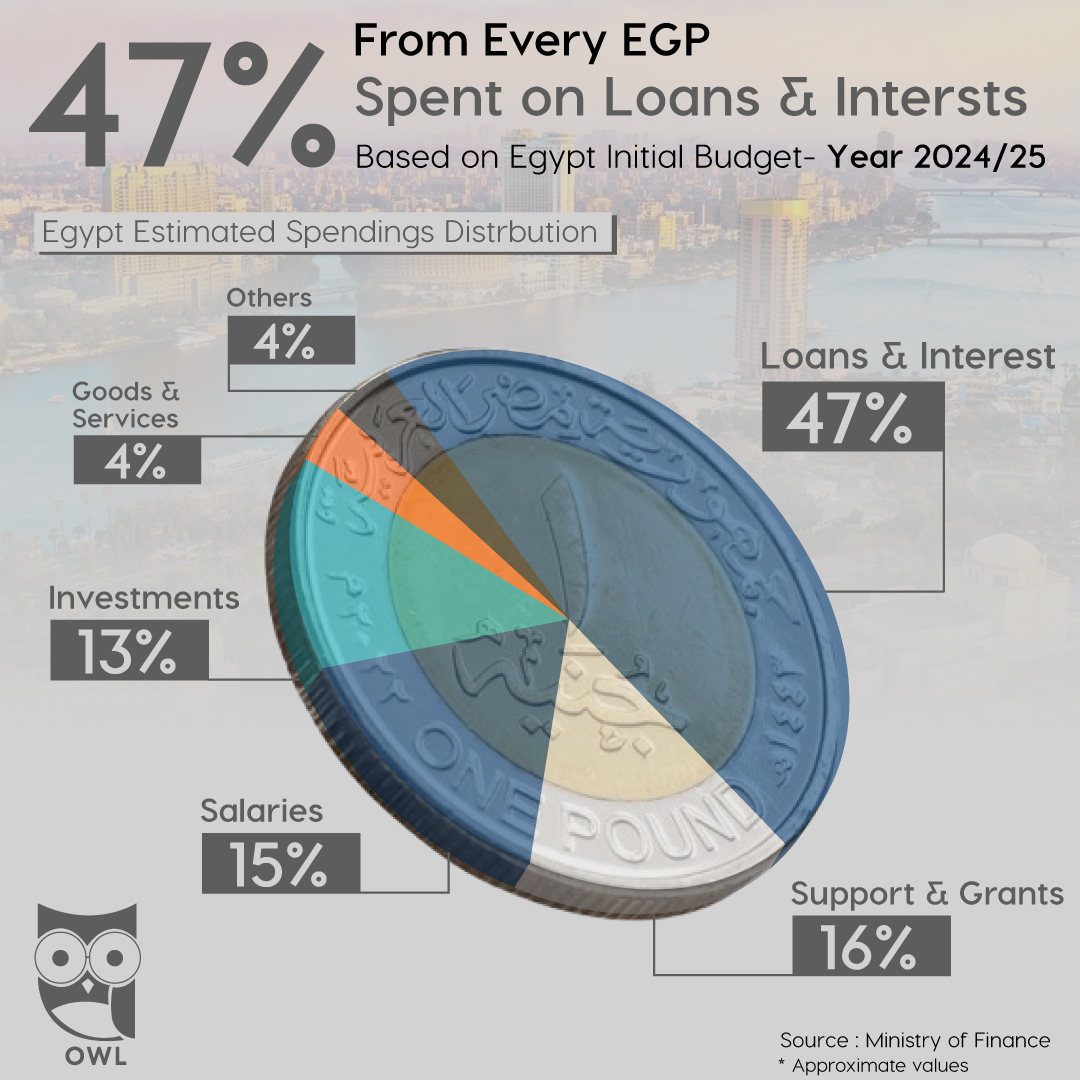
- Spending on debt servicing is central: it will make up 47.4% of total outlays, up sharply from ~37.4% in 2023/24. FrontierView
- Subsidies, grants & social benefits are allocated ~16.4% of total expenditure in 2024/25, down from ~17.7% in 2023/24 and 20.8% in 2022/23. FrontierView
What These Percentages Tell Us
- Nearly half of Egypt’s budget is committed just to maintaining existing obligations (interest on debt), leaving less flexibility for development, new projects, or expanding services.
- Although subsidies & social benefits are still significant, their proportion is gradually shrinking (relative to total expenditure). This could be due to inflation, rising debt costs, and attempts to shift some costs.
- Investment spending is rising nominally, but much of it is already earmarked for ongoing projects; new projects may face delays or funding constraints.
- Education & health are under pressure: while constitutional and policy goals may demand higher shares, recent budgets show these sectors are getting a smaller slice relative to all spending.
Curveballs & Challenges
- Inflation and exchange rate moves push up costs of fuel, food, imports — meaning the same percentage often buys less.
- Revenue constraints limit how much the government can shift spending. To raise new revenue, there’s pressure for tax reforms and improving collection.
- Debt servicing crowding out other priorities is a major concern. As interest rates or debt stock rises, that burden grows.
Outlook & Implications
- Expect continued attempts to rebalance: more efficient subsidy targeting, possible reduction of less critical outlays, negotiation of better borrowing terms.
- Pressure from international partners (IMF, donors) to improve fiscal discipline, transparency in spending, and prioritize human development.
- Monitoring growth in absolute spending on health, education, and infrastructure is essential — even if their percentage shares fluctuate.