Emirates Investment in Egypt (From 2022 to Present): Major Deals & Strategic Impact
Introduction
Over the past few years, the United Arab Emirates (UAE) has stepped up significantly as one of Egypt’s top foreign investors. A combination of large-scale deals, joint ventures, and state fund participation has marked this phase. These investments are driven by mutually beneficial goals: Egypt needs capital, foreign exchange reserves, and privatization; UAE seeks growth opportunities, strategic geopolitical ties, and returns.
Major Deals & Key Investments
- Ras Al-Hekma Peninsula Development (~US$35 Billion Deal)
- Announced February 2024, this deal led by ADQ (Abu Dhabi’s sovereign wealth fund) aims to develop a “next-generation city” on the Mediterranean coast west of Alexandria. al-monitor.com+4Reuters+4Timep+4
- Scope: residential zones, tourism, airport, investment zones, a free zone, leisure infrastructure. Reuters+2FinDevLab+2
- Financing: US$24B fresh funding + US$11B through converting UAE deposits in Egypt’s Central Bank. FinDevLab+2Timep+2
- UAE Acquisitions & Privatizations via ADQ & Other Emirati Firms
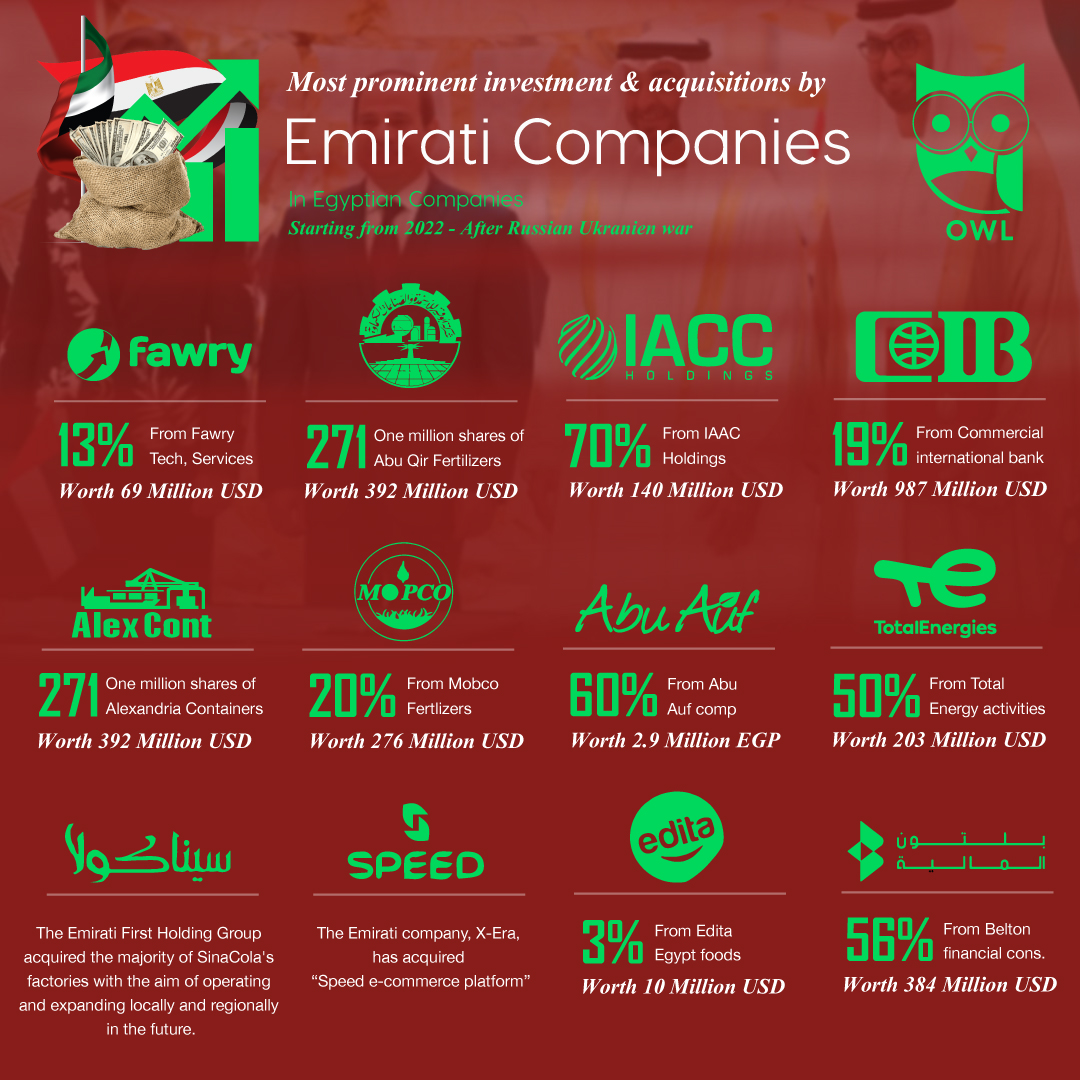
- Emirati investment in Egyptian banks: ADQ acquired an 18% stake in Commercial International Bank (CIB), Egypt’s largest private bank. taqasee.org
- Investment in financial services & fintech: UAE investors contributed to stakes in companies like Fawry (digital payments platform). taqasee.org
- In petrochemicals/fertilisers: UAE firms acquired stakes in Abu Qir Fertilizers, ELAB (Linear Alkyl Benzene Company), and other industrial players. taqasee.org
- Real Estate & Hospitality Investments
- A US$500 million deal was signed in July 2024 between Egyptian Safwat Kaliouby Group and UAE’s KSH Investment for a mixed real estate project on Warraq Island in Cairo, including three residential/commercial towers and a five-star hotel. Reuters
- Emirati interest in hotel assets and tourism infrastructure has been rising, especially in coastal and heritage property sectors. taqasee.org+1
- Ports, Logistics & Industrial Zones
- UAE’s Abu Dhabi Ports signed a 50-year agreement with Egypt’s Suez Canal Economic Zone (SCZone) to build and manage a new industrial & logistics zone in East Port Said. The first phase includes a multipurpose terminal and quay. Ecofin Agency
- These investments are designed to leverage Egypt’s strategic position for trade and transit. Ecofin Agency
Drivers and Strategic Motives
- Foreign Exchange & Liquidity Support: Many deals include converting UAE deposits in Egypt’s Central Bank into investments, helping Egypt’s foreign currency reserves. FinDevLab+1
- Privatization Agenda: The Egyptian government has opened up more state-owned enterprises and assets to UAE investors as part of its ownership and privatization policy. taqasee.org
- Tourism & Real Estate: UAE’s investments often target high-yield sectors like real estate, coastal tourism, and luxury hotels.
- Industrial Growth & Trade Logistics: With port zones and industrial parks, there is a push to enhance manufacturing, export capacity, and trade infrastructure.
Risks and Challenges
- Transparency & Sovereignty Concerns: Some critics argue that large land deals and privatizations may reduce state control, especially when oversight is limited. taqasee.org+2The Guardian+2
- Economic Volatility: Inflation, currency devaluation, and foreign exchange shortage in Egypt increase risks for investors and can delay project execution.
- Regulatory & Political Risk: Changes in laws, governance, or policy direction might affect investment contracts (e.g. free zones, land use).
- Public Sentiment: There is growing scrutiny around who benefits from mega-projects and whether these investments improve living standards broadly.
Implications for Egypt’s Economy
- These UAE-led deals are helping close external financing gaps and shore up liquidity for the Egyptian state in challenging economic times. FinDevLab+1
- They bring infrastructure and service sector growth, along with job creation—especially in real estate, tourism, logistics, and industry.
- They may accelerate urban development of underutilized coastal zones (like Ras Al-Hekma) and support government’s long-term plans for economic growth and industrialization.
- On the flip side, Egypt must balance attracting foreign investment with protecting local stakeholders’ interests and ensuring that gains are distributed equitably.
Conclusion
Emirati investment in Egypt from 2022 onward has been large-scale, strategic, and multi-sectoral. At the heart of many of these deals is the massive $35B Ras Al-Hekma project, which symbolizes a turning point in Egypt-UAE economic relations. With growing investment in ports, logistics zones, real estate, and industrial assets, these deals have boosted Egypt’s foreign exchange, infrastructure, and investor confidence. Still, long-term success will depend on how well these investments are managed, regulated, and aligned with broader economic and social goals.