Trade Overview
The United States remains one of Egypt’s most important non-Arab trade partners. Despite the global slowdown, trade between the two countries continues to show resilience, supported by energy, textiles, and industrial goods.


Trade Overview
The United States remains one of Egypt’s most important non-Arab trade partners. Despite the global slowdown, trade between the two countries continues to show resilience, supported by energy, textiles, and industrial goods.
Top Imports from the U.S.
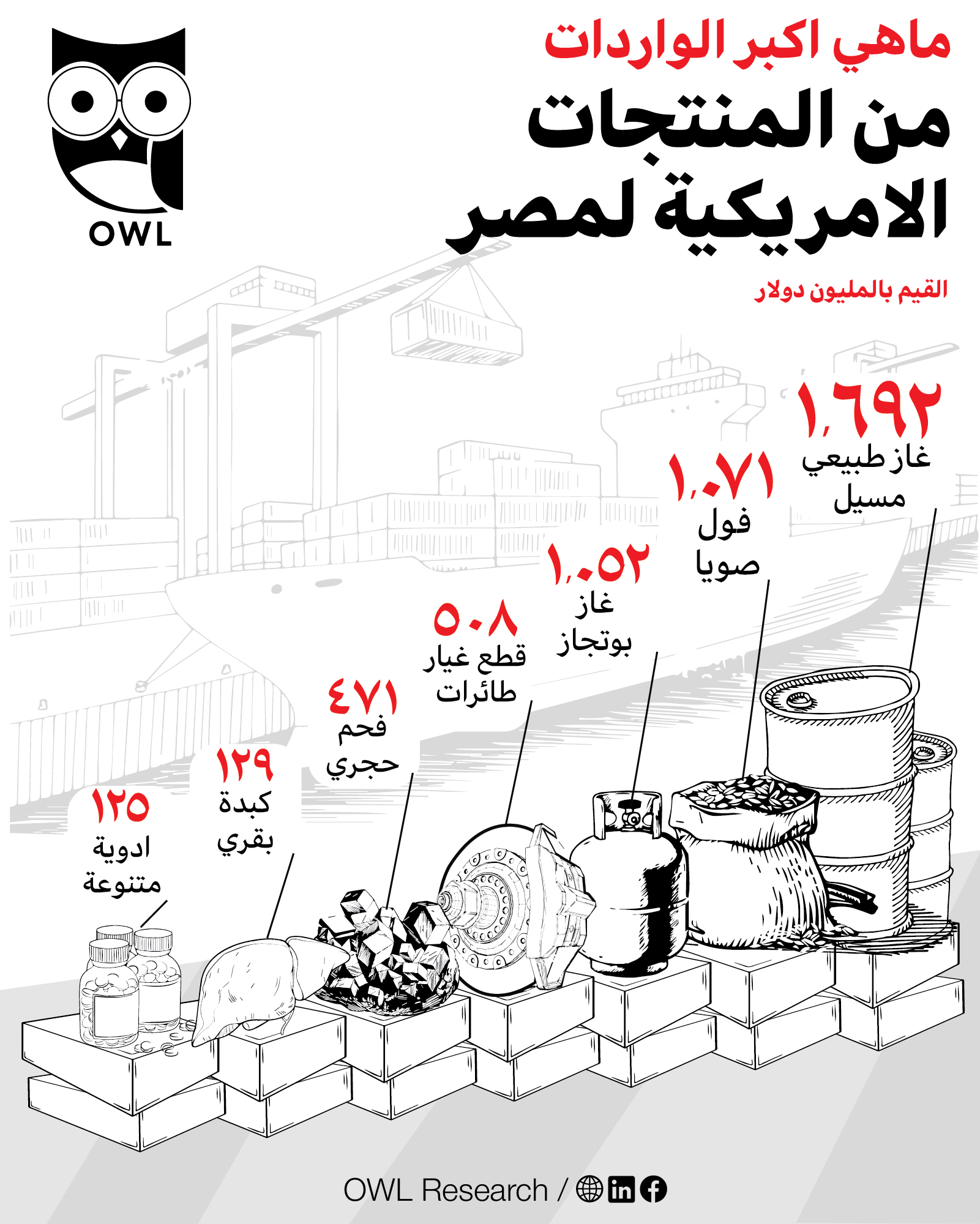
According to Owl Research data, Egypt’s top imports from the United States include:
- Liquefied natural gas (LNG) – $1.69 billion
- Soybeans – $1.07 billion
- Butane gas – $1.05 billion
- Aircraft parts – $508 million
- Coal – $471 million
- Beef liver – $129 million
- Pharmaceuticals – $125 million
These imports reflect Egypt’s reliance on U.S. energy inputs and agricultural commodities, which play a critical role in supporting the local industrial and food sectors.
Top Exports to the U.S.
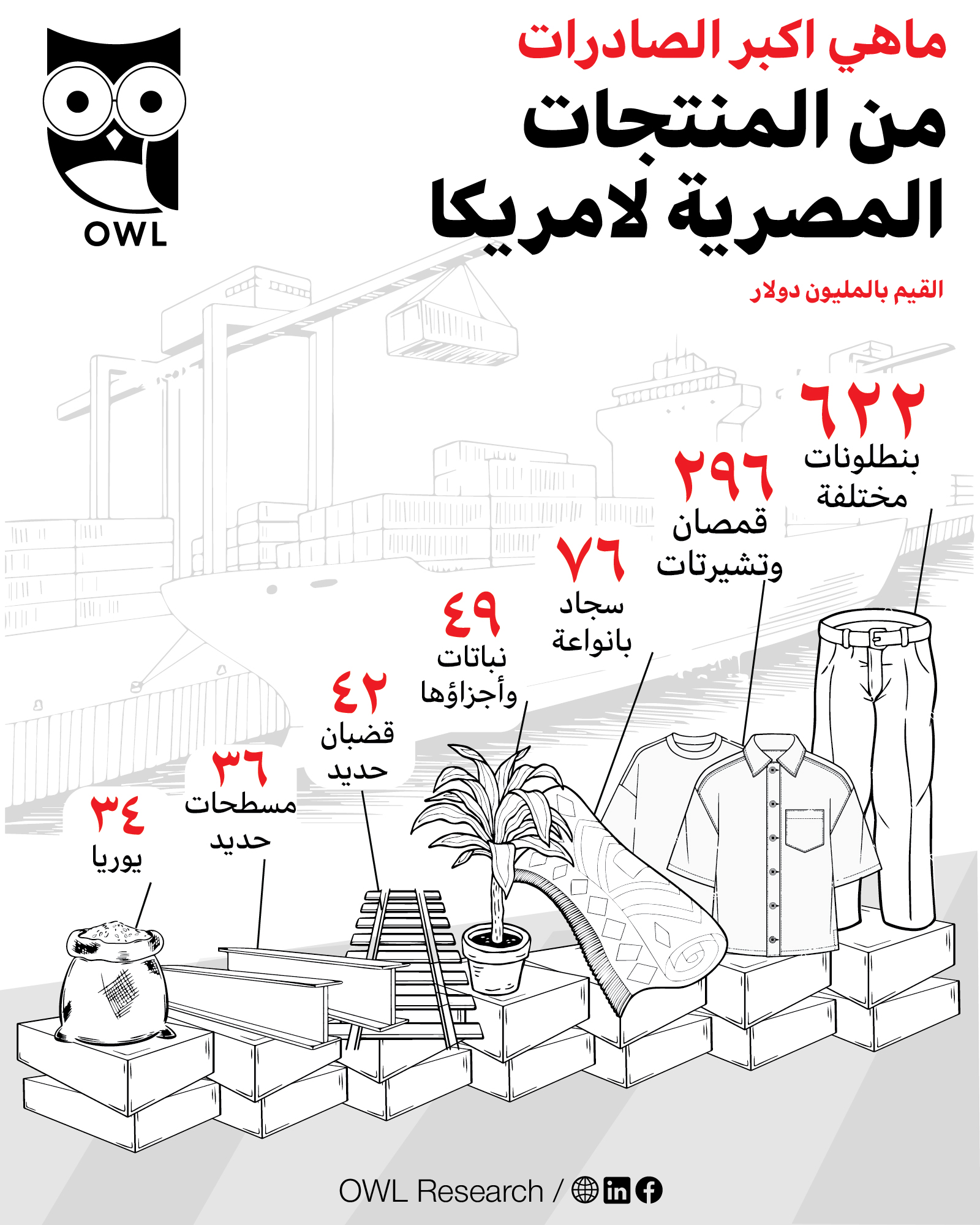
Egypt’s leading exports to the U.S. highlight the country’s strong manufacturing and textile base:
- Apparel and garments – $622 million
- Shirts and T-shirts – $296 million
- Carpets and textiles – $76 million
- Plants and parts – $49 million
- Iron bars and sheets – $42 million and $36 million respectively
- Urea – $34 million
The data underscores the continued strength of Egypt’s textile industry, alongside growing contributions from agricultural and industrial goods.
The Opportunity Ahead
With Egypt enjoying relatively favorable U.S. tariff rates (around 10%), the country is well positioned to expand its exports — particularly in ready-made garments, fertilizers, and processed foods.
Improving production standards, logistics, and trade agreements could help Egypt capture a larger share of the American market.
Owl Research continues to analyze Egypt’s trade and industry dynamics to highlight growth opportunities and policy implications.
👉 Follow Owl Research for more economic insights and sector-focused data stories.