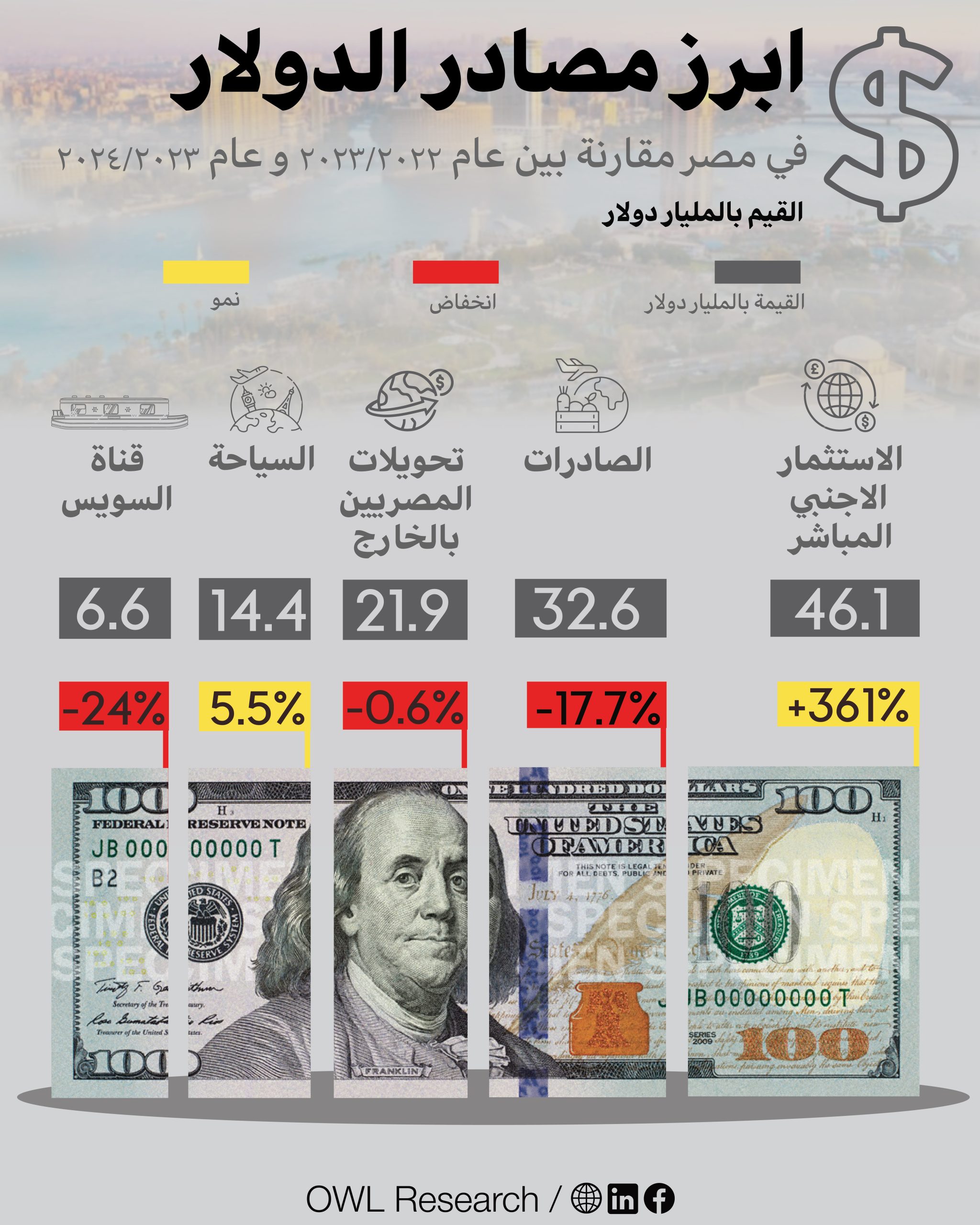
A recent comparative analysis highlights significant changes in Egypt’s primary sources of vital foreign currency (USD) between the 2023/2022 and 2024/2025 fiscal periods. The data reveals a story of sharp volatility, steep declines in traditional pillars, and the dramatic rise of one key sector.

The Dramatic Winner: Foreign Direct Investment
The most striking shift is the explosive growth in Foreign Direct Investment (FDI), which surged by an astonishing 361%. This jump, from a value of $10.0 billion to a projected $46.1 billion, represents a transformative inflow of capital. This surge is largely attributed to mega-deals, most notably the $35 billion investment from the UAE for the development of the Ras El-Hekma project on the Mediterranean coast, which has single-handedly reshaped Egypt’s financial outlook.
Pressured Traditional Pillars
In contrast, other major traditional sources of dollars have faced substantial pressure:
- Suez Canal Revenues: Suffered a severe decline of 24%, dropping from an estimated $19.0 billion to $14.4 billion. This is directly linked to ongoing disruptions in Red Sea shipping, which have significantly reduced canal traffic and transit fees.
- Remittances from Egyptians Abroad: Fell by 17.7%, from an estimated $26.6 billion to $21.9 billion. Economic pressures on diaspora communities and possibly alternative, informal transfer channels may be contributing factors.
- Exports: Saw a marginal decrease of 0.6%, remaining relatively stable but showing no growth, moving from $32.8 billion to $32.6 billion.
Tourism: A Modest Bright Spot
Tourism was the only other sector besides FDI to show growth, with a 5.5% increase from $13.6 billion to $14.4 billion. This indicates a steady, if slow, recovery in a sector crucial for employment and hard currency.
Conclusion: A New Financial Landscape
The analysis underscores a pivotal moment for Egypt’s economy. While traditional engines like the Suez Canal and remittances are sputtering due to external shocks, the unprecedented boom in FDI—driven by strategic asset monetization—has created a powerful new financial buffer. This shift reduces immediate balance-of-payments risks but also highlights the economy’s exposure to volatile external revenue streams and the critical need to stimulate more sustainable growth in exports and domestic production.