Recent data reveals a significant and consistent downward trend in Egypt’s fertility rates over the past decade, marking a pivotal demographic shift for the Arab world’s most populous nation.
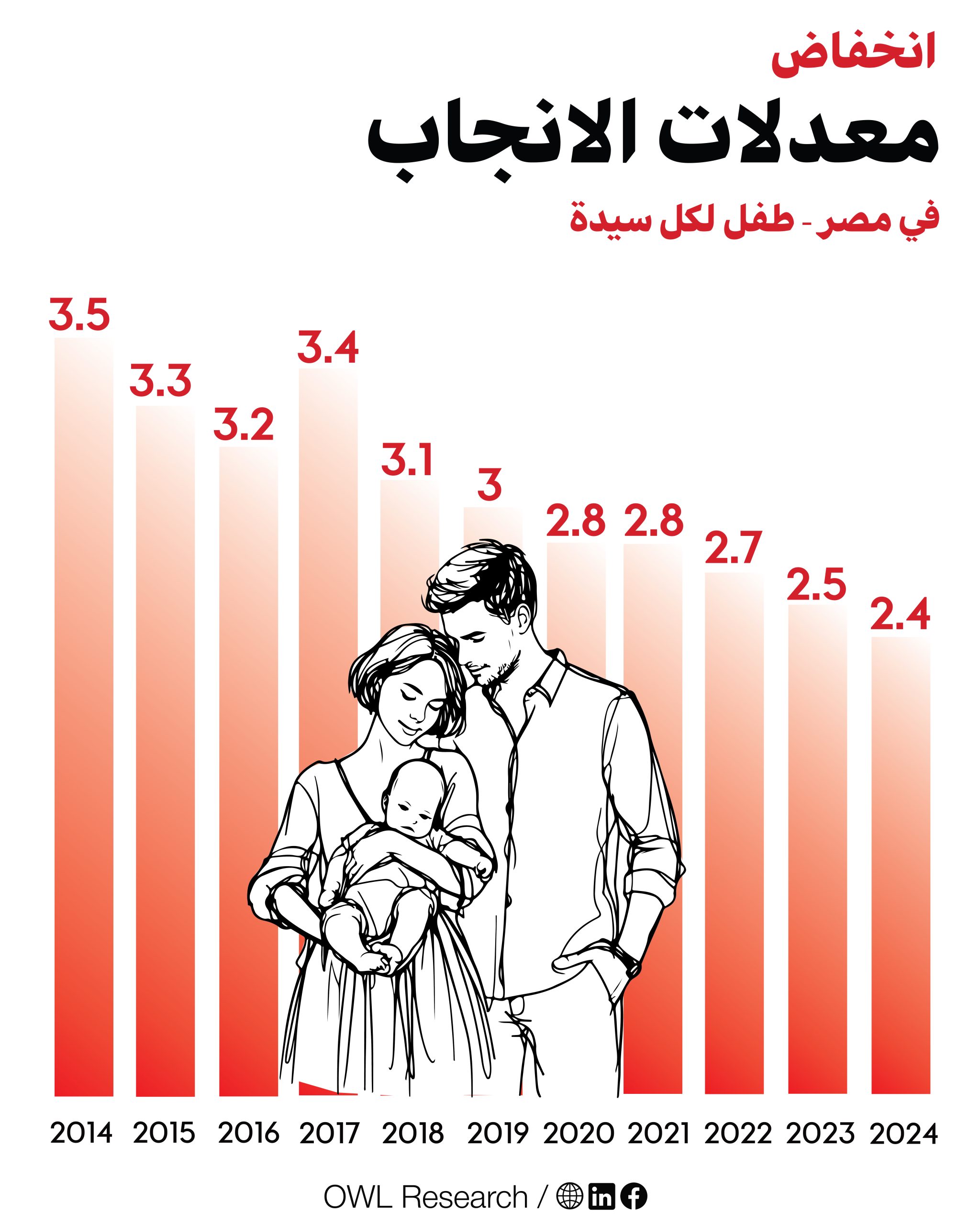
The Total Fertility Rate (TFR)—which represents the average number of children a woman is expected to have in her lifetime—has fallen from 3.5 children per woman in 2014 to 2.4 in 2024. This represents a decline of over 30% in just ten years.
Key Trends in the Data:
- Sustained Decline: The drop has not been a one-year anomaly but a persistent, year-on-year decrease, with only minor fluctuations (such as a slight uptick in 2017).
- Breaking the “3.0” Threshold: A notable milestone was reached around 2021-2022 when the rate permanently fell below 3.0 children per woman, a level long considered a benchmark for high fertility.
- Continued Momentum: The decline has continued into 2024, reaching a new low of 2.4.
Implications of the Trend:
This demographic transition carries profound implications for Egypt’s future:
- Economic Opportunity: A falling youth dependency ratio could create a “demographic dividend,” where a larger share of the working-age population can boost economic growth if coupled with sufficient job creation and investment.
- Planning Challenges: It eases long-term pressure on public services like education, healthcare, and housing, allowing for more targeted and higher-quality investments.
- Future Aging: While currently a young nation, this trend is the first step toward an aging population structure in the more distant future, necessitating forward-looking policies on pensions and elderly care.
Potential Drivers:
While the data presented does not specify causes, such a rapid decline is typically associated with a combination of factors, including:
- Increased female education and workforce participation.
- Wider availability and use of family planning services.
- Government-led national awareness campaigns on family size.
- Rising costs of living and urbanization, which influence family planning decisions.
The steady drop in Egypt’s fertility rate to 2.4 children per woman indicates a major societal transformation. If sustained, it will fundamentally reshape the country’s demographic profile and its associated social and economic planning horizons in the coming decades.