The rental market in Giza continues to reflect significant differences in housing costs across neighbourhoods, with average monthly rents varying considerably depending on location, accessibility, building quality and the surrounding urban environment.
Data for Q2 2026 shows a clear gap between the most expensive and more affordable areas across Giza, highlighting the diversity of the governorate’s residential rental market.
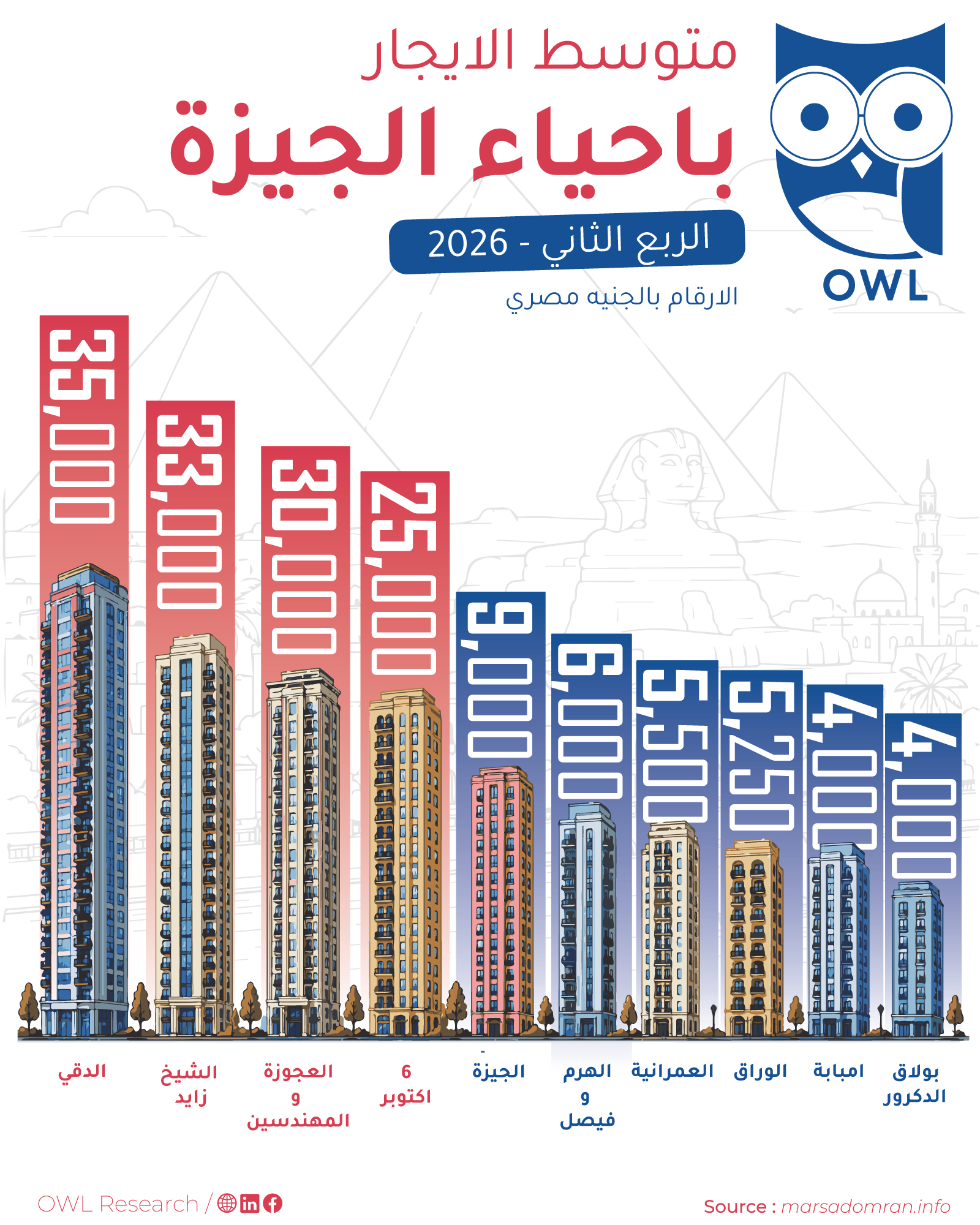
Dokki Leads the Giza Rental Market
According to the figures presented in our analysis, Dokki records the highest average monthly rent among the selected Giza areas, at approximately EGP 40,000.
It is followed by Sheikh Zayed, with average rents of around EGP 33,000, while Agouza and 6th of October record approximately EGP 30,000 and EGP 25,000, respectively.
These areas benefit from established residential communities, strong connectivity, access to commercial and service facilities, and relatively high demand from both residents and professionals.
A Wide Gap Across Neighbourhoods
The differences become more pronounced when moving toward the lower end of the market.
Giza records an average monthly rent of approximately EGP 15,000, followed by Haram at around EGP 13,000.
Other areas, including Omraniya, Warraq, Imbaba and Bulaq El Dakrour, record average rents ranging from approximately EGP 7,000 to EGP 10,000.
This creates a substantial gap between the highest and lowest average rents in the selected locations.
Location Remains a Key Driver
The rental differences across Giza demonstrate how strongly location influences residential property values.
Neighbourhoods with better access to major roads, business districts, commercial centres and established services tend to command higher rental prices.
At the same time, more affordable areas continue to serve a significant segment of the market, particularly households that prioritise affordability and accessibility over premium residential amenities.
What This Means for the Housing Market
The variation in rents across Giza points to a highly segmented residential market.
For landlords and property investors, understanding these differences can help identify areas with stronger rental potential and assess pricing relative to competing neighbourhoods.
For tenants, the data highlights the importance of comparing locations based not only on rent, but also on accessibility, services, housing quality and overall cost of living.
The Bigger Picture
Giza’s rental market illustrates a broader trend visible across Egypt’s major urban centres: residential demand is increasingly differentiated by income, location and lifestyle preferences.
As urban populations continue to grow and housing costs remain an important component of household expenditure, rental-market data can provide valuable insights into changing consumer and real estate behaviour.
OWL Research Perspective
At OWL Research, we look at real estate not simply through property prices, but through the consumer and market dynamics behind them.
The variation in rental prices across Giza reflects how location, affordability and lifestyle are reshaping residential demand.
From EGP 7,000 to EGP 40,000, Giza’s rental market tells a clear story: location can make all the difference.