Home Appliances Imports in Africa: Trends, Challenges, and Opportunities
Introduction
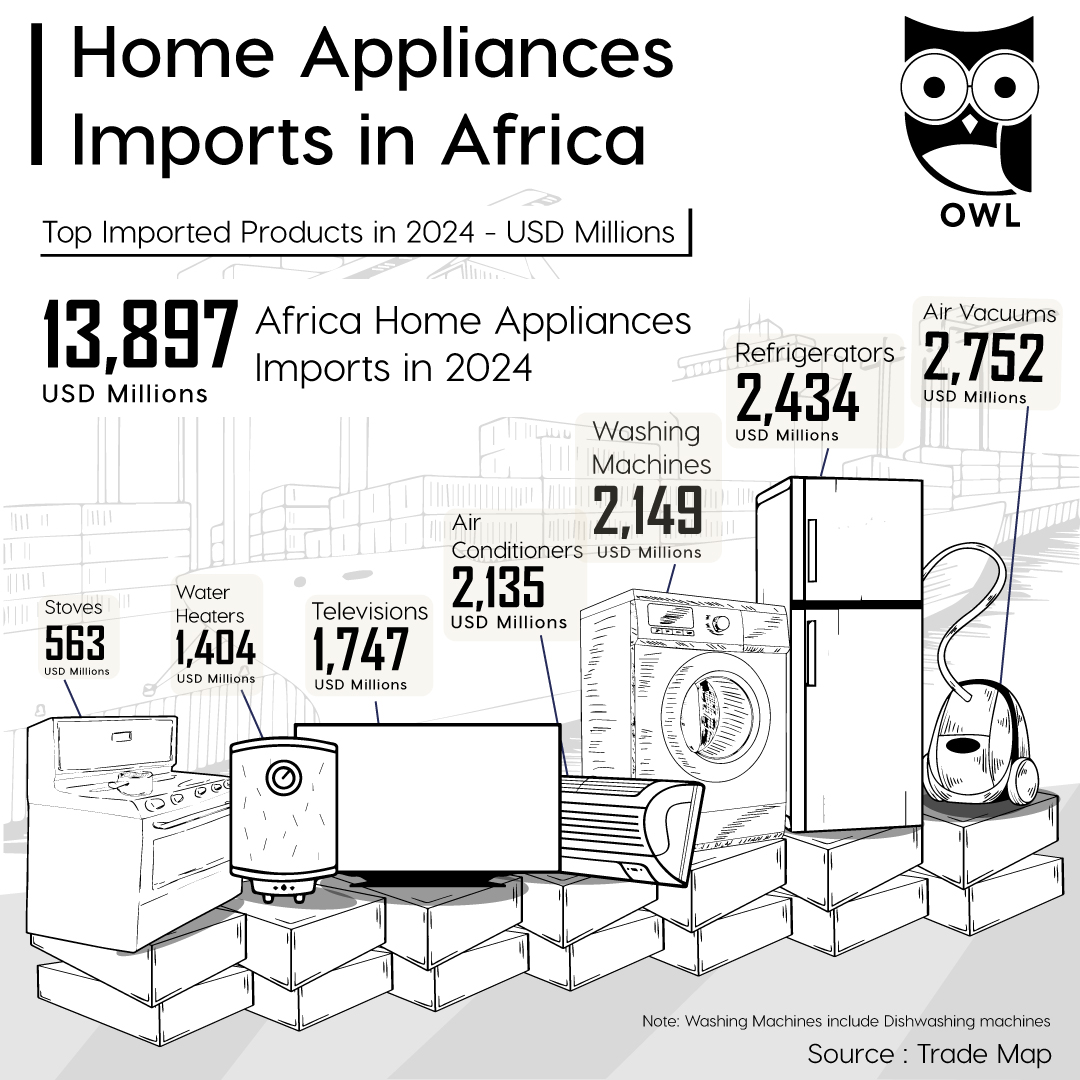
The home appliances market in Africa has been experiencing rapid growth, driven by rising urbanization, expanding middle-class income, and changing consumer lifestyles. Imports of refrigerators, washing machines, air conditioners, and small kitchen appliances are becoming increasingly important to meet the continent’s growing demand. With limited large-scale manufacturing capacity across many African countries, imports remain the backbone of the home appliance supply chain.
Market Trends in Home Appliances Imports
- Growing Urban Population
Africa’s urban population is projected to double by 2050, which is boosting demand for modern housing and household equipment. Imported home appliances such as refrigerators, microwaves, and fans are seen as essential for modern living. - Energy-Efficient Products
Consumers are increasingly seeking energy-efficient and eco-friendly appliances. Import data shows a steady rise in LED lighting, inverter air conditioners, and low-consumption refrigerators, reflecting both consumer preferences and government regulations. - E-Commerce Driving Demand
Online platforms such as Jumia, Takealot, and Kilimall have created new channels for imported appliances, making them more accessible to middle-income households.
Key Importing Countries in Africa
- South Africa: The largest market, importing a wide range of appliances from Asia and Europe.
- Nigeria: High demand for refrigerators, fans, and generators due to its population size and climate conditions.
- Egypt & Morocco: Act as both consumers and regional re-export hubs for North Africa.
- Kenya & Ghana: Fast-growing demand for small appliances like blenders, kettles, and irons.
Main Import Sources
- China dominates Africa’s imports of home appliances, supplying affordable mass-market products.
- Europe (Germany, Italy, Turkey) supplies premium and durable brands.
- Middle East acts as a re-export hub, especially for Gulf-origin appliances.
Challenges Facing Home Appliances Imports
- High Import Tariffs and Taxes: Increase the retail prices for consumers.
- Logistics and Infrastructure Gaps: Port delays and poor inland transport raise costs.
- Currency Fluctuations: Importers face risks due to exchange rate volatility.
- Informal Market Competition: Grey imports and counterfeit products challenge official distributors.
Future Outlook
The African home appliance market is expected to keep growing, fueled by urban expansion, rising disposable incomes, and digital retail channels. Importers who focus on energy efficiency, affordable pricing, and after-sales service will be best positioned to capture this expanding market.