Introduction
Iran’s ballistic missile program remains one of the largest and most advanced in the Middle East. Amid rising regional tensions, questions continue to surface:
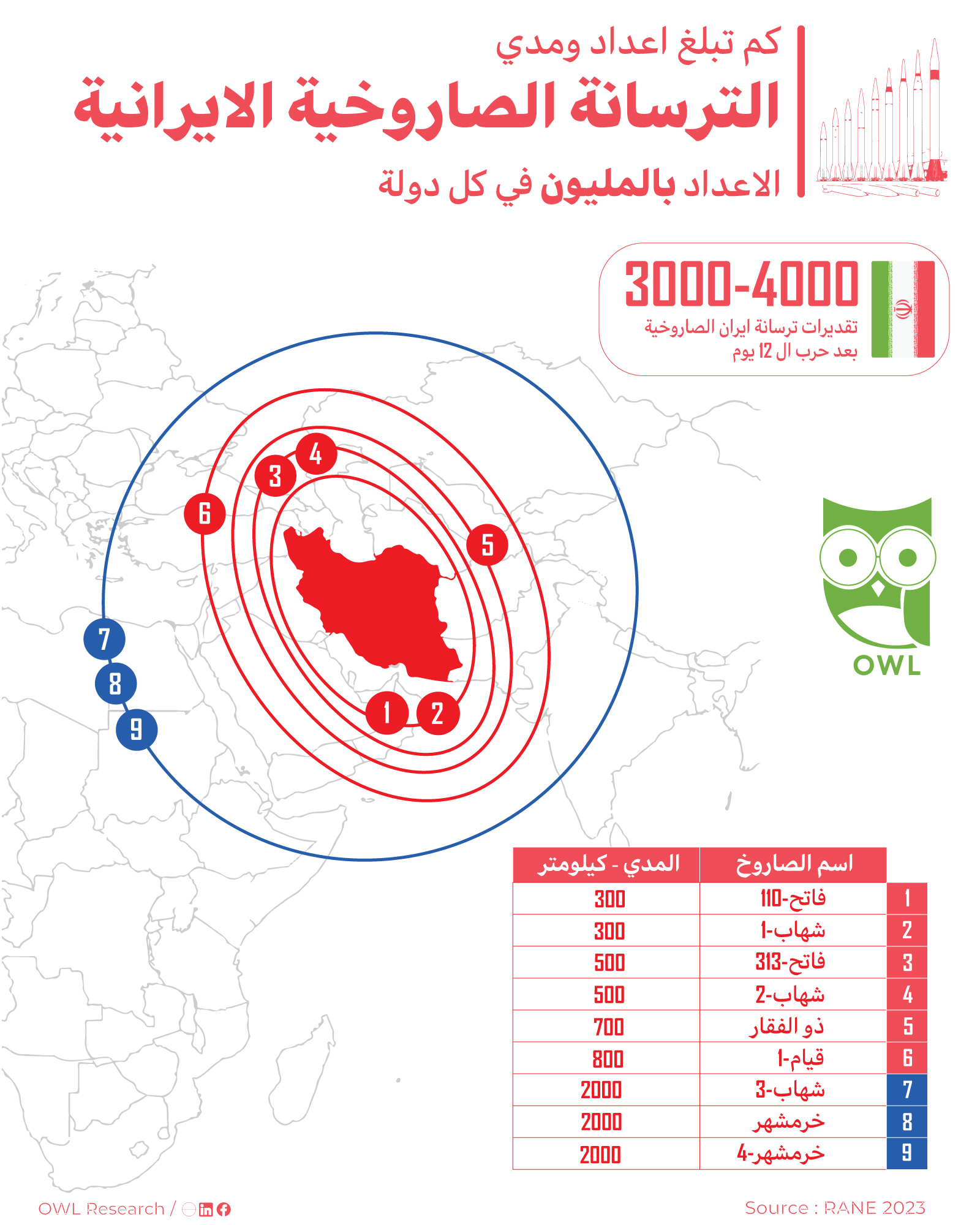
How many missiles does Iran possess? And what is their operational range?
Based on available analytical estimates, Iran’s ballistic missile arsenal is currently assessed at approximately:
3,000 – 4,000 missiles
These figures are estimates derived from defense analysis and open-source intelligence, not official government disclosures.
Estimated Size of Iran’s Missile Arsenal
Following recent regional escalations, defense analysts estimate that Iran maintains between 3,000 and 4,000 ballistic missiles of varying ranges.
This inventory includes:
- Short-range ballistic missiles (SRBM)
- Medium-range ballistic missiles (MRBM)
- Advanced precision-guided systems
Even after potential operational usage or limited conflict scenarios, the overall inventory is believed to remain within this range due to domestic production capacity.
Missile Range Breakdown
Iran’s missile program spans multiple range categories, allowing coverage of regional and extended targets.
Short-Range Ballistic Missiles (Up to 300 km)
- Fateh-110 – 300 km
- Shahab-1 – 300 km
Primarily designed for near-regional deterrence and tactical deployment.
Medium-Range Ballistic Missiles (500–800 km)
- Fateh-313 – 500 km
- Shahab-2 – 500 km
- Zolfaghar – 700 km
- Qiam-1 – 800 km
These systems extend operational reach across Gulf states and nearby regional targets.
Extended Medium-Range Systems (Up to 2,000 km)
- Shahab-3 – 2,000 km
- Khorramshahr – 2,000 km
- Khorramshahr-4 – 2,000 km
Missiles in this category significantly expand Iran’s deterrence footprint, reaching parts of Europe and deeper into strategic regional zones.
Strategic Implications
The scale and range diversity of Iran’s missile arsenal serve multiple strategic objectives:
- Regional deterrence
- Asymmetric warfare capability
- Strategic depth against adversaries
- Influence over maritime chokepoints
Missile range, rather than sheer quantity alone, defines the geopolitical weight of this arsenal.
Production Capacity and Sustainability
Iran’s domestic missile manufacturing capability is a key factor. Even under sanctions, production continuity has allowed:
- Inventory replenishment
- System upgrades
- Technological refinement
This industrial base ensures that short-term depletion does not equate to long-term capability reduction.
Final Assessment
While precise figures remain classified, current analytical consensus places Iran’s ballistic missile arsenal at 3,000–4,000 missiles, with ranges extending up to 2,000 kilometers.
In geopolitical terms, this makes Iran one of the most missile-capable states in the broader Middle East region.