The Strait of Hormuz remains one of the most strategically important maritime chokepoints in the world. Amid rising geopolitical tensions, global markets are closely monitoring vessel movement through this narrow passage.
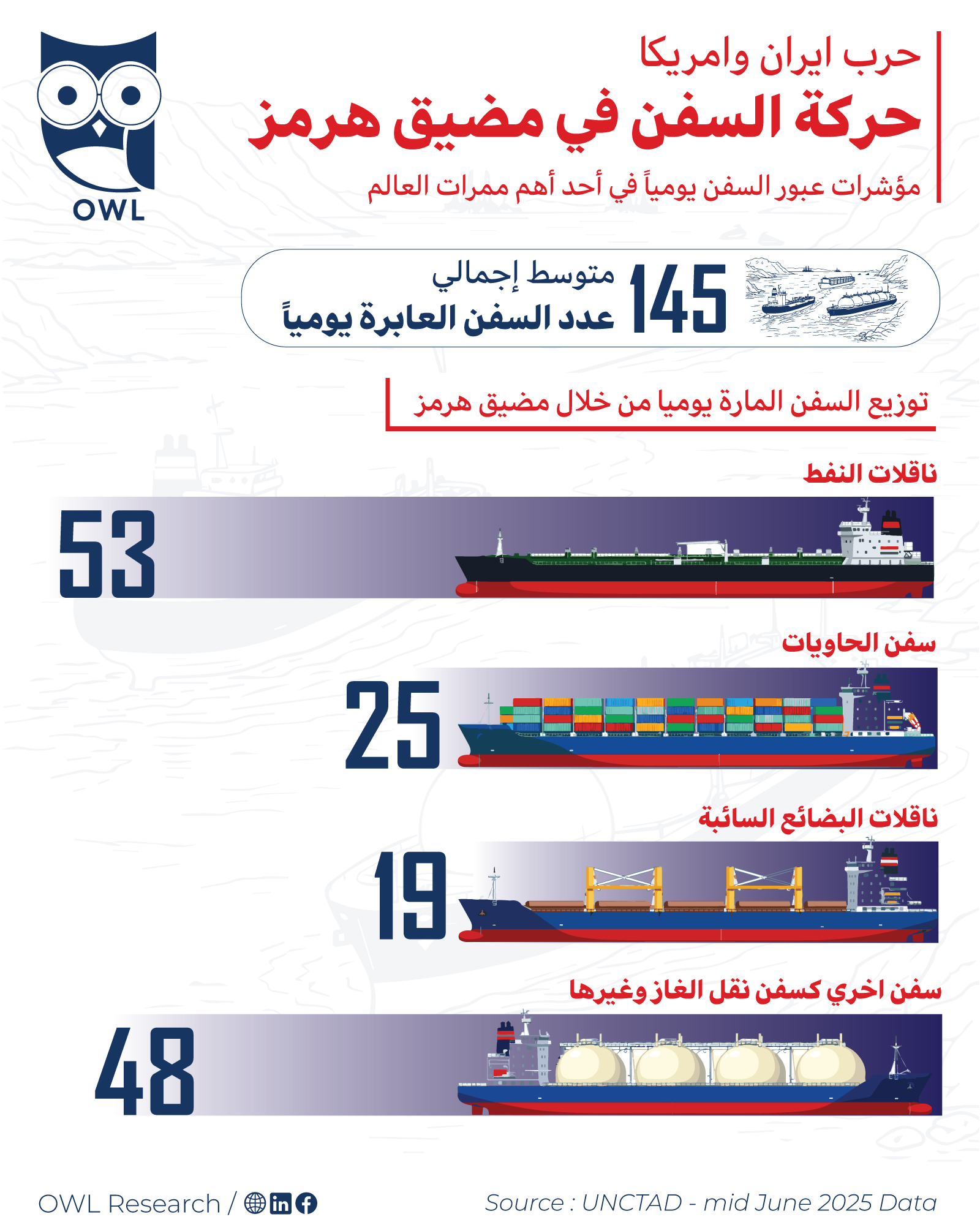
According to mid-June 2025 data from UNCTAD, an average of 145 ships transit the Strait of Hormuz daily. This level of activity highlights the strait’s critical role in energy exports, global supply chains, and international trade stability.
Why the Strait of Hormuz Is Critical
The Strait of Hormuz connects the Persian Gulf with the Arabian Sea and the broader Indian Ocean. It serves as a primary export route for major oil-producing countries in the Gulf region.
A disruption in this corridor would directly impact:
- Global oil prices
- LNG supply chains
- Containerized trade between Asia, Europe, and the Middle East
- Shipping insurance costs and freight rates
In short, what happens in Hormuz does not stay in Hormuz — it affects the global economy.
Daily Ship Traffic Breakdown (Mid-June 2025)
Based on available data, the daily distribution of vessels transiting the Strait of Hormuz is as follows:
1️⃣ Oil Tankers – 53 Vessels Per Day
Oil tankers represent the largest single category. These vessels transport crude oil and petroleum products to global markets, particularly Asia and Europe. Any interruption here would immediately impact energy markets.
2️⃣ Container Ships – 25 Vessels Per Day
Container ships carry manufactured goods, electronics, machinery, and consumer products. Their presence highlights the strait’s importance beyond energy — it is also a key artery for global trade flows.
3️⃣ Bulk Carriers – 19 Vessels Per Day
Bulk carriers transport commodities such as grains, metals, coal, and construction materials. This segment reflects the movement of essential raw materials supporting industrial production worldwide.
4️⃣ Gas Carriers and Other Specialized Vessels – 48 Vessels Per Day
This category includes LNG carriers and other specialized transport ships. Liquefied natural gas shipments are particularly sensitive to geopolitical risk due to tight global supply-demand balances.
What This Means for Global Markets
With 145 vessels passing daily, even minor disruptions could trigger:
- Energy price volatility
- Freight rate spikes
- Supply chain delays
- Higher risk premiums for shipping insurance
Markets tend to react not only to actual disruptions but also to perceived risks. Therefore, monitoring ship movement data is a key leading indicator for investors, policymakers, and logistics operators.
Strategic Implications
From a strategic perspective, the Strait of Hormuz is not just a maritime corridor — it is a pressure point in global geopolitics.
The concentration of oil tankers (53 per day) underlines the energy dependency of global markets on uninterrupted Gulf exports. Meanwhile, container and bulk flows emphasize the strait’s broader trade relevance.
Any escalation in regional tensions could rapidly translate into economic consequences far beyond the Middle East.
Final Thoughts
The daily transit of 145 vessels through the Strait of Hormuz is more than a statistic — it represents the backbone of global energy security and trade continuity.
As geopolitical developments unfold, continuous monitoring of maritime traffic data will remain essential for understanding potential risks to global markets.