Ramadan is one of the most consumption-intensive seasons in Egypt, particularly for food commodities. Among the most essential ingredients during Suhoor and Iftar preparations are edible oils and fats, which play a critical role in traditional Egyptian dishes and fried Ramadan staples.
According to Trade Map data, Egypt’s oil imports (including fats and edible oils) have shown a steady upward trend between 2020 and 2024, reflecting both rising domestic demand and structural reliance on imported vegetable oils.
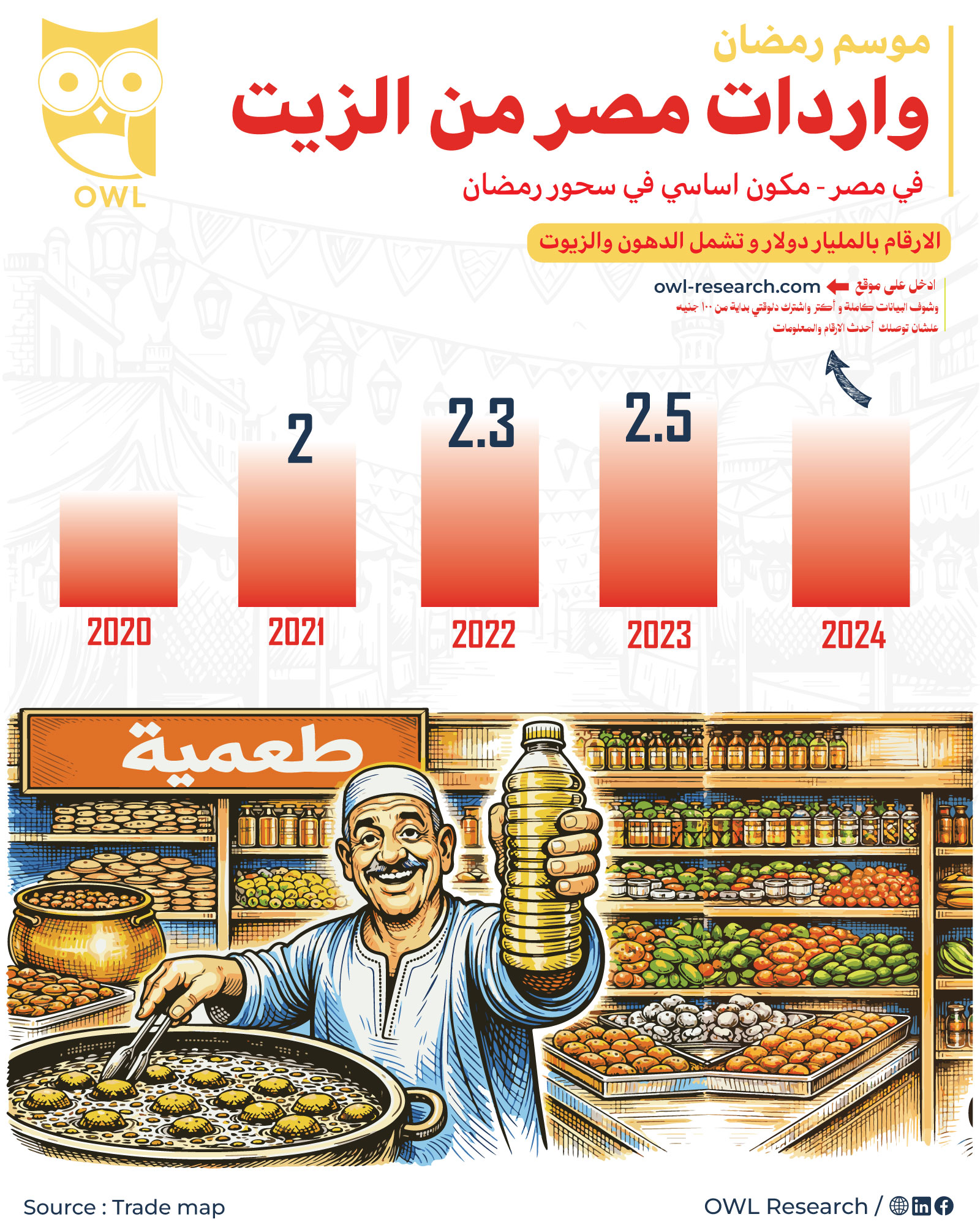
Egypt Edible Oil Imports Trend (2020–2024)
Egypt remains a net importer of vegetable oils, and import values have increased consistently over recent years:
- 2021: USD 2.0 billion
- 2022: USD 2.3 billion
- 2023: USD 2.5 billion
- 2024: Continued upward trajectory
Compared to 2020 levels, oil import values have expanded significantly, driven by:
- Higher global commodity prices
- Currency fluctuations
- Increased population-driven demand
- Seasonal consumption spikes during Ramadan
Why Oil Demand Surges in Ramadan
During Ramadan, Egyptian households significantly increase preparation of:
- Fried foods such as taameya (falafel)
- Qatayef and other sweet pastries
- Sambousek and other traditional dishes
This seasonal consumption pattern makes edible oil a strategic food commodity, particularly during the holy month.
Market and Economic Implications
The sustained rise in oil imports highlights several structural realities:
- High import dependency on sunflower, soybean, and palm oils
- Exposure to global price volatility
- Foreign currency pressure from food commodity imports
- Strategic importance of boosting local oilseed production
As Ramadan demand continues to shape consumption behavior, understanding oil import trends becomes essential for policymakers, food manufacturers, and retailers alike.