Ramadan is not only a spiritual season in Egypt — it is also one of the most economically dynamic periods of the year. Among the key commodities driving seasonal demand is sugar, a core ingredient in traditional Ramadan desserts such as kunafa, qatayef, basbousa, and other sweets.
According to data from CAPMAS, Egypt’s sugar production and consumption have shown noticeable fluctuations between 2021 and 2025, reflecting shifts in domestic demand, pricing pressures, and supply chain dynamics.
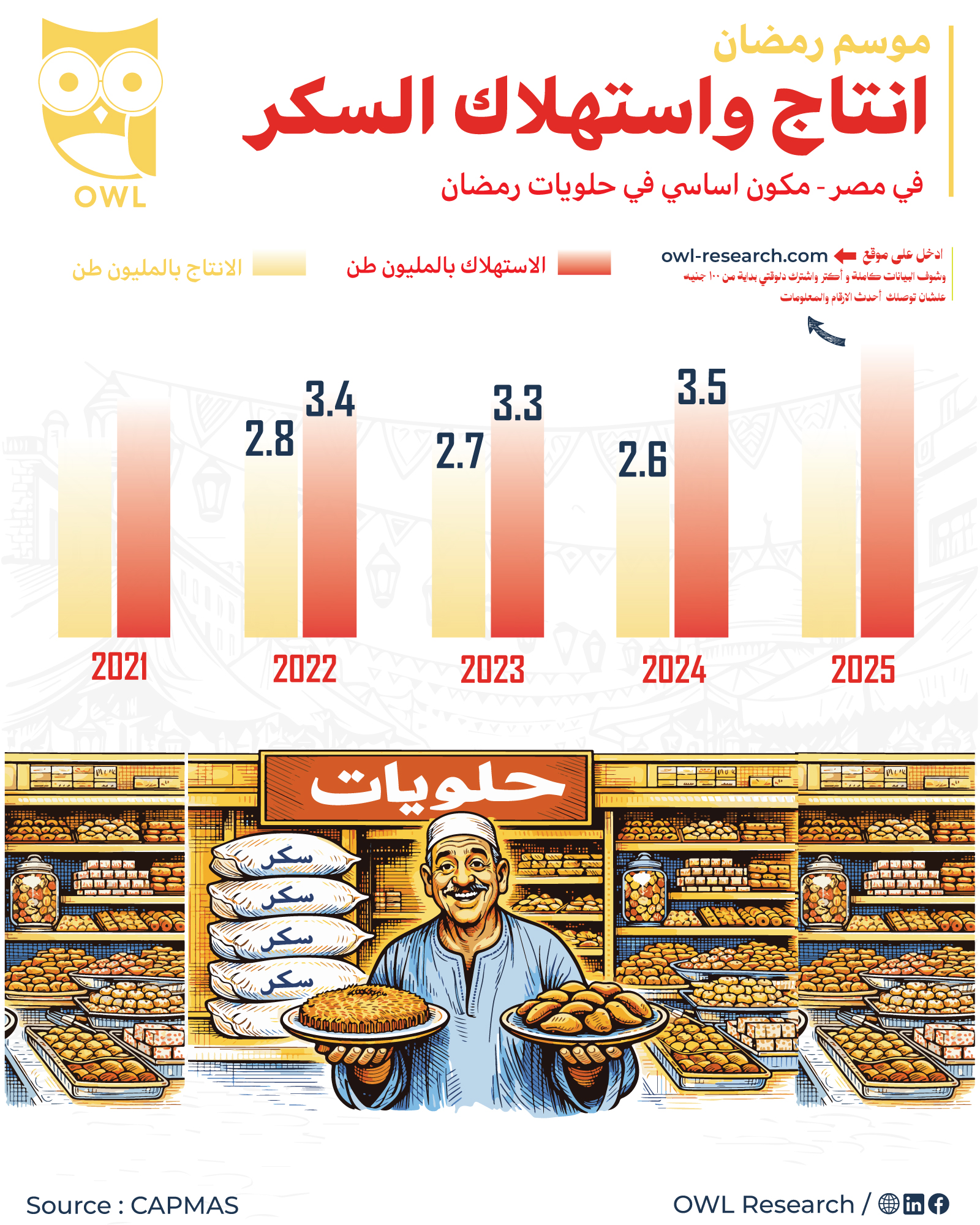
Egypt Sugar Consumption Trends (2021–2025)
Sugar consumption in Egypt remains structurally high, especially during Ramadan when household demand peaks significantly.
- 2022: 2.8 million tons
- 2023: 2.7 million tons
- 2024: 2.6 million tons
- 2025: Estimated increase compared to 2024
The data shows a gradual moderation in consumption between 2022 and 2024, potentially driven by price increases, inflationary pressures, and more rationalized household spending. However, Ramadan continues to act as a seasonal demand catalyst.
Egypt Sugar Production Trends (2021–2025)
On the production side, Egypt has maintained relatively stable output levels:
- 2022: 3.4 million tons
- 2023: 3.3 million tons
- 2024: 3.5 million tons
- 2025: Continued strength in production
Production consistently exceeds domestic consumption, supporting Egypt’s efforts toward greater self-sufficiency in sugar. The 2024 increase to 3.5 million tons reflects improved agricultural yields and expanded beet cultivation.
Ramadan: A Seasonal Demand Multiplier
Ramadan significantly reshapes consumer behavior in Egypt. Sweets consumption rises sharply, increasing demand for sugar across:
- Traditional confectionery shops
- Household dessert preparation
- Food manufacturing sector
Sugar becomes a strategic commodity during this period, influencing retail pricing, supply chain planning, and import decisions when needed.
Market Implications
The balance between production and consumption indicates:
- Relative supply stability
- Seasonal demand spikes
- Strategic importance of agricultural planning
For policymakers and market participants, understanding Ramadan-driven consumption cycles is essential for price stabilization and inventory management.