Ramadan in Egypt is not only a spiritual season — it is also an economic one. Among the most iconic seasonal products is the traditional Ramadan lantern (Fanous Ramadan), a cultural symbol deeply embedded in Egyptian households.
According to CAPMAS trade data analysis, Egypt’s lantern imports have witnessed a sharp decline over the past five years.
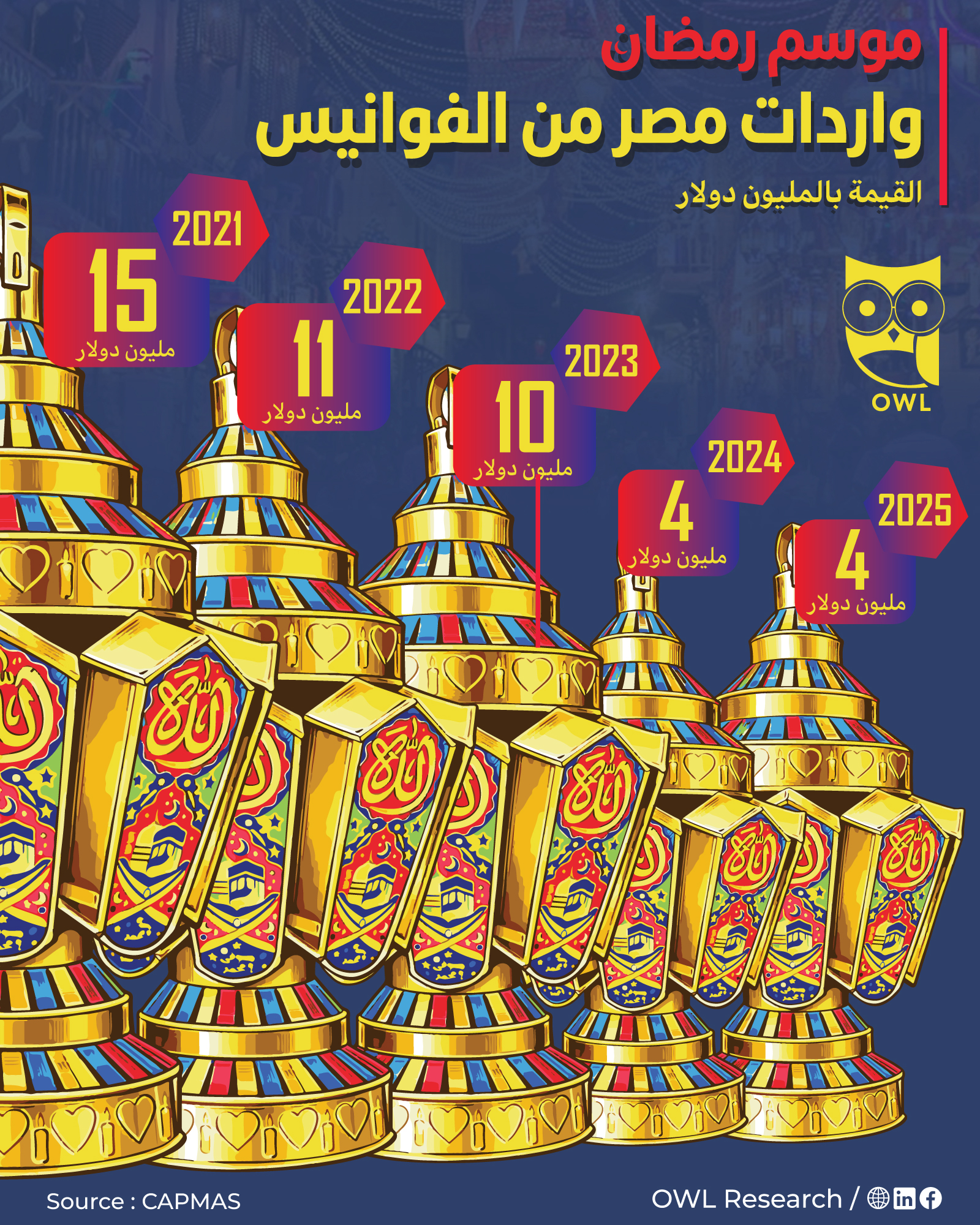
Import Values (Million USD)
- 2021: $15 million
- 2022: $11 million
- 2023: $10 million
- 2024: $4 million
- 2025: $4 million
The numbers show a clear downward trend, with imports dropping by nearly 73% between 2021 and 2025.
What Is Driving the Decline?
Several factors may explain this significant contraction:
1️⃣ Import Restrictions & FX Pressures
Egypt has experienced periods of foreign currency shortages and tighter import controls, which likely impacted non-essential seasonal goods.
2️⃣ Rising Local Production
There has been a growing shift toward locally manufactured lanterns, especially handmade and traditional metal designs.
3️⃣ Consumer Behavior Shifts
Households may be prioritizing essential spending amid inflationary pressures, reducing demand for decorative imports.
Why This Matters
Seasonal products like Ramadan lanterns provide a valuable lens into:
- Consumer discretionary spending
- Import dependency trends
- FX exposure in non-essential goods
- Cultural goods market dynamics
The stabilization at $4 million in 2024 and 2025 could signal a new lower baseline for imported lanterns — or a structural shift toward domestic production.