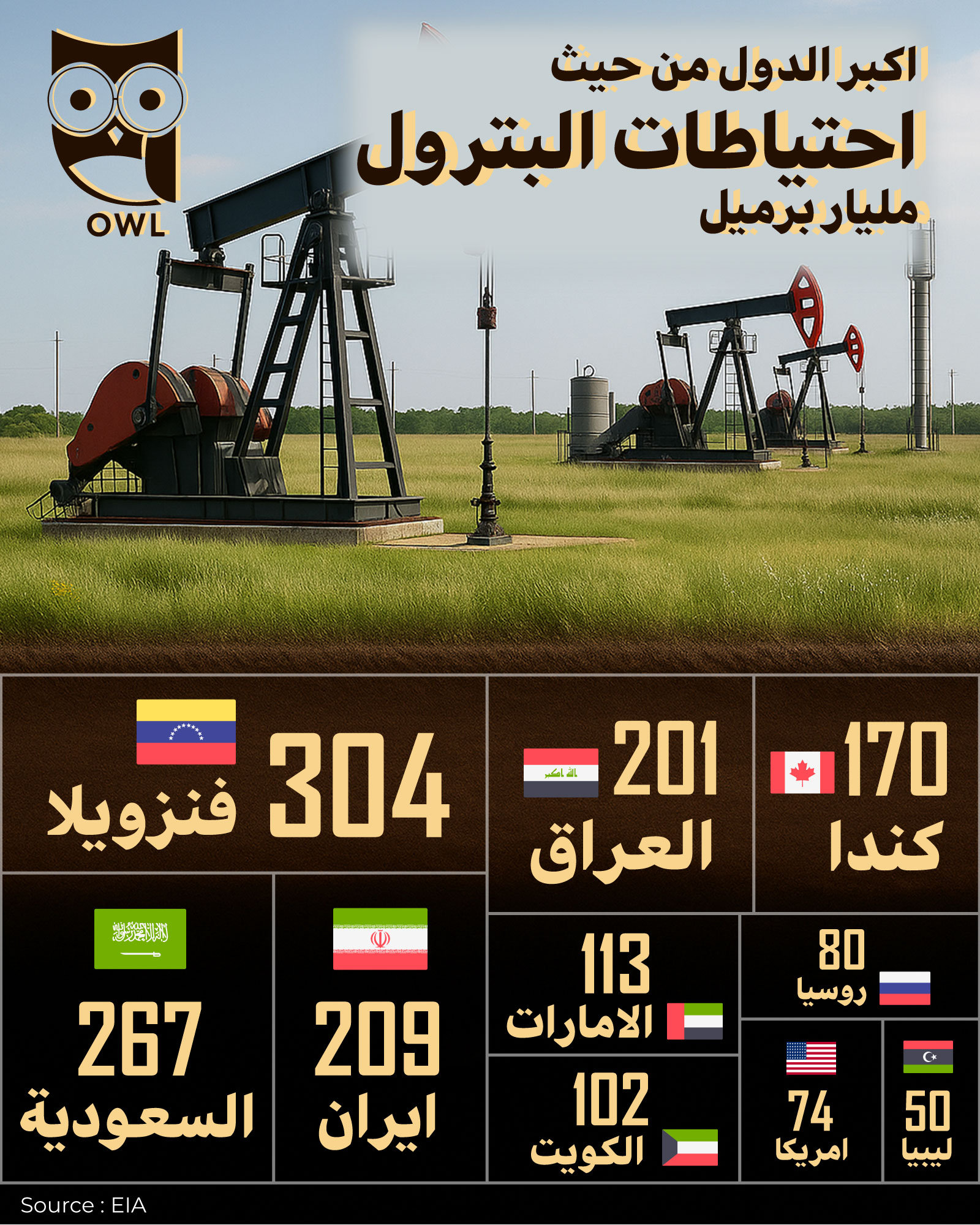
According to EIA data, global oil reserves are heavily concentrated in a small group of countries. Venezuela tops the list with around 304 billion barrels, followed by Saudi Arabia (267 bn) and Iran (209 bn). In the wider Middle East, Iraq, UAE and Kuwait also hold massive reserves, giving the region a central role in the long-term energy supply map. Outside the Middle East, Canada, Russia, the United States and Libya complete the top tier.
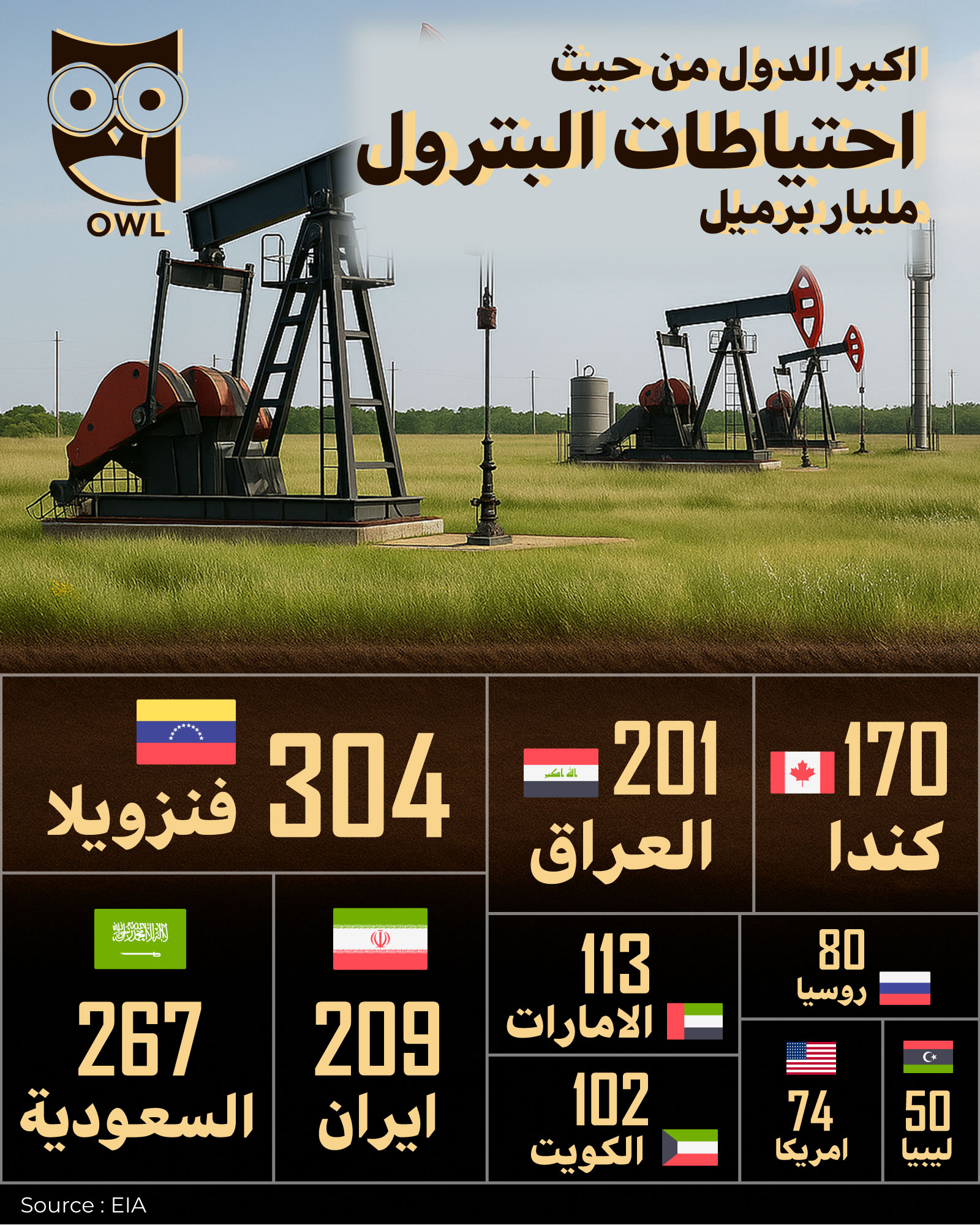
But having large reserves doesn’t automatically mean being the biggest producer. Politics, investment, sanctions, technology and extraction costs all influence how much of these reserves actually reach the market. That’s why production rankings can look very different from reserve rankings.
Understanding where reserves are concentrated helps explain why certain countries have outsized influence in OPEC decisions, global energy security and even currency and foreign policy debates. As the world gradually shifts towards cleaner energy, these reserves remain a key asset—but also a strategic challenge—for oil-rich economies.