Licensed Vehicles in Egypt: Trends, Statistics & Outlook
Introduction
Licensed vehicles in Egypt include all cars, motorcycles, trucks, buses, and other motorized vehicles legally registered and licensed to operate on public roads. Tracking these vehicles is important for understanding transport infrastructure, economic activity, air pollution, fuel consumption, and mobility patterns.
Key Trends in Licensed Vehicles
- Rapid Growth in Vehicle Registration
Over the past decade, Egypt has seen a steady increase in the number of licensed vehicles. This is driven by population growth, rising incomes, and increased urbanization. New middle-class households often acquire private cars, motorcycles, or small commercial vehicles to meet mobility needs. - Shift in Vehicle Composition
- Motorcycles and scooters are common in rural and suburban areas because they’re more affordable and can navigate urban traffic more easily.
- Compact cars tend to dominate registrations in cities. Larger vehicles and SUVs are fewer but growing among higher-income consumers.
- Commercial vehicles (trucks, minibuses, delivery vans) remain crucial due to their role in trade, goods transport, and logistics.
- Role of Import vs Local Assembly
- Some vehicles are imported as completely built units (CBUs), often older models, subject to higher import tariffs and taxes.
- Others are assembled locally, particularly for larger car brands or commercial vehicles, benefiting from government incentives in industrial zones.
- Regulation and Licensing Process
- Vehicles must pass inspections and meet safety and emission standards before licensing.
- Licensing typically requires proof of insurance, payment of registration fees, and compliance with local traffic law.
- There are renewal cycles (every few years) or transfer requirements when ownership changes.
Statistical Highlights (Recent Years)
Here are some of the key figures and facts based on latest available data:
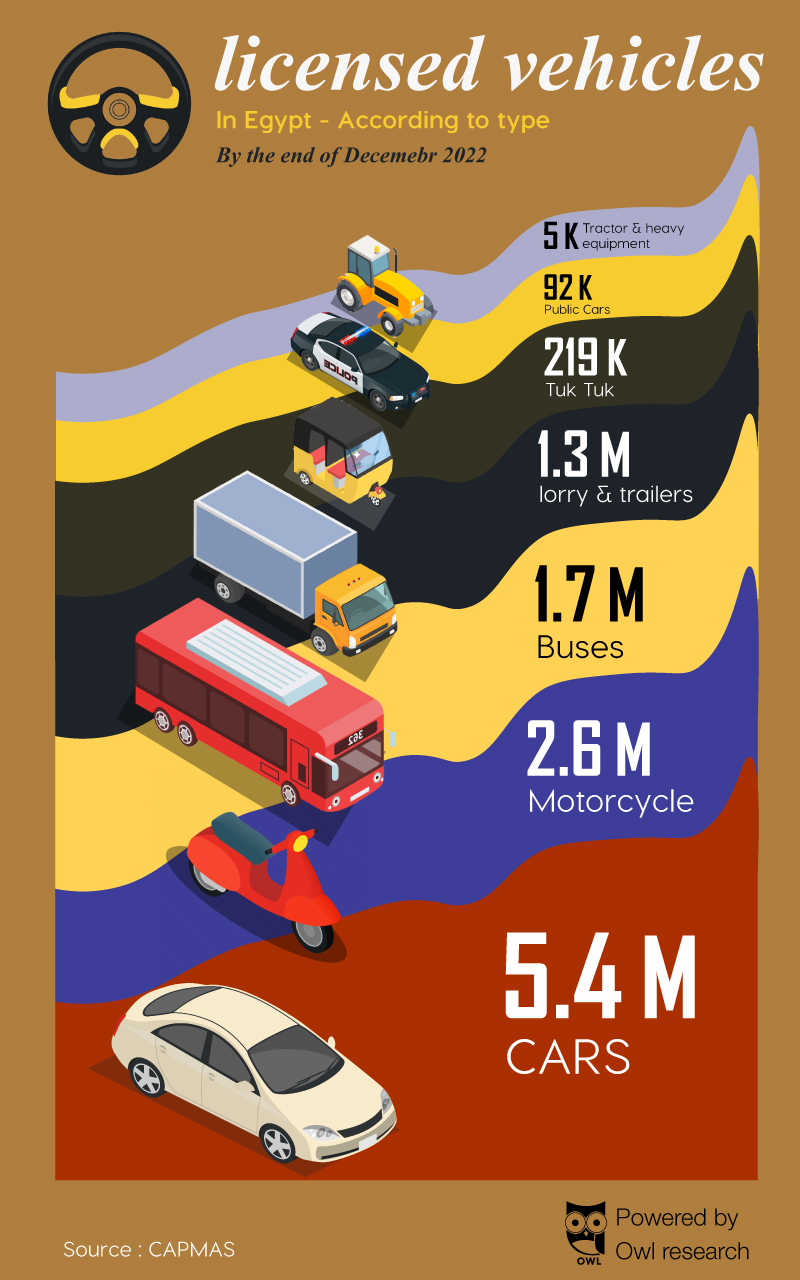
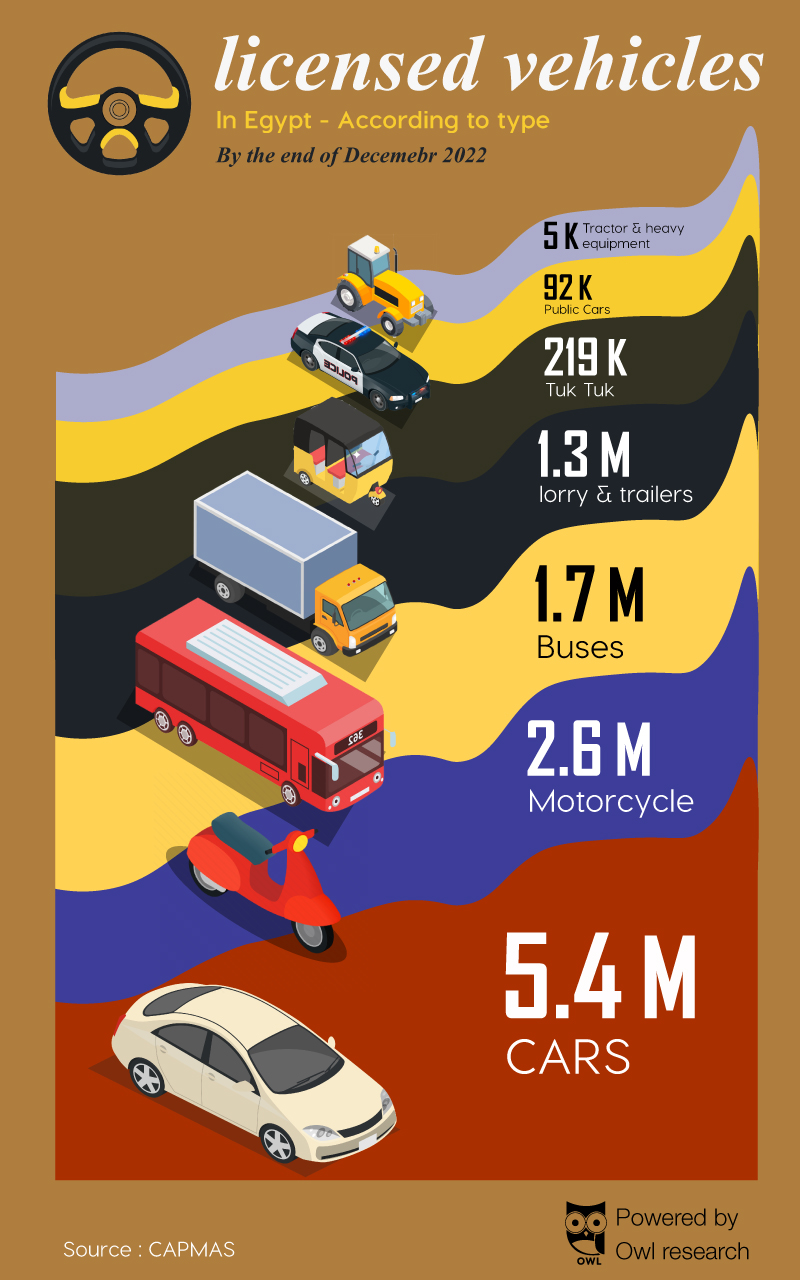
- Over 20+ million licensed vehicles registered in Egypt (covering all vehicle types), with a strong concentration in Cairo, Giza, Alexandria, and other major governorates.
- The fleet is aging in many cases; a substantial portion of registered vehicles are more than 10 years old, which has implications for emissions and maintenance demand.
- Rising fuel prices, customs/taxes on imported vehicles, and currency fluctuations significantly affect vehicle purchase cost.
Challenges and Policy Implications
- Traffic Congestion & Air Pollution
As vehicle numbers grow, congestion and emissions rise, especially in large urban centers. This creates public health, environmental, and quality-of-life concerns. - Infrastructure Strain
Road networks, parking, and traffic systems struggle to keep up with rising vehicle density. Maintenance costs and expansion of urban roads are constant challenges. - Cost Barriers for Consumers
The price of vehicles is affected by import duties, foreign exchange rates, and taxes. This makes newer, safer, more efficient vehicles less affordable for many. - Environmental and Safety Standards
There is increasing pressure to enforce stricter emissions standards, fuel efficiency, and safety regulations for licensed vehicles. Older, more polluting vehicles contribute disproportionately to emissions. - Formal vs Informal Vehicle Use
Many vehicles, especially motorcycles or three-wheelers, may be used informally or not properly licensed, which complicates statistics and tax/fee collection.
Outlook & Opportunities
- Growth in Electric Vehicles (EVs): Policy incentives, reduction of import taxes, and development of charging infrastructure could drive uptake of EVs.
- Technological Integration: Smart licensing systems, online renewal, GPS tracking for commercial fleets, and “pay-as-you-drive” insurance models.
- Regulatory Reforms: Streamlined registration, subsidy/tax reforms, emission-testing services to retire older vehicles.
- Manufacturing & Assembly Expansion: Promoting local assembly or even local manufacturing of key parts to reduce import dependence and cost.
Conclusion
Licensed vehicles in Egypt offer a lens into broader economic, social, and environmental dynamics. Rising numbers reflect growing demand for mobility, driven by urbanization and economic growth. However, the challenges — from air pollution to cost barriers and aging fleets — are significant. Effective policy, combined with infrastructural investment and innovation, will determine how sustainably Egypt manages its growing vehicle fleet in the coming years.