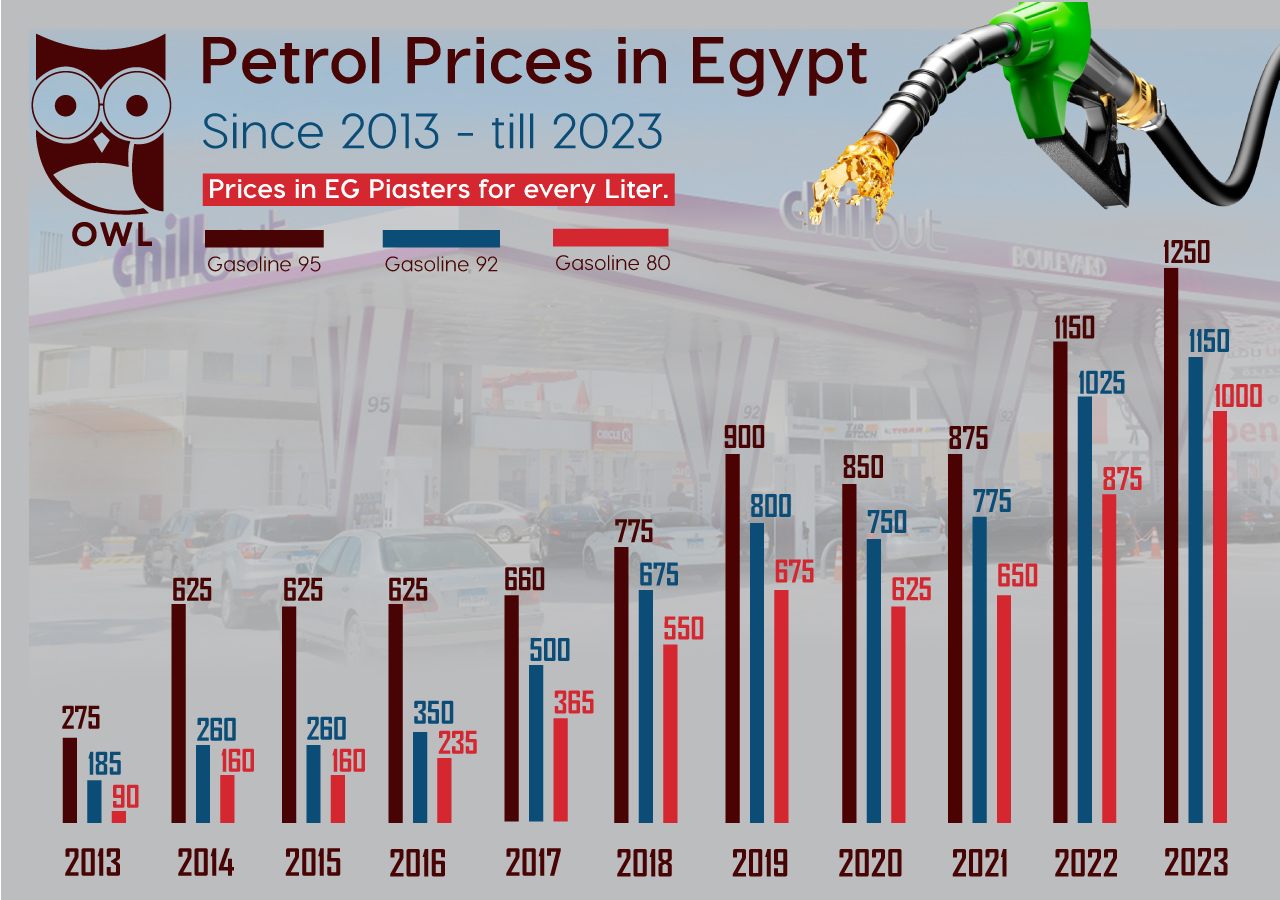
Over the past decade, petrol prices in Egypt have undergone significant increases, reflecting global oil market fluctuations, government subsidy reforms, and economic adjustments. Between 2013 and 2023, fuel prices more than quadrupled, heavily impacting transportation costs, consumer goods, and household expenses.
1. Petrol Prices in Egypt by Type (2013–2023)
Gasoline 95 (Premium)
- 2013: 275 piasters per liter
- 2017: 660 piasters
- 2020: 850 piasters
- 2023: 1,250 piasters
👉 Premium gasoline saw one of the largest cumulative increases, reflecting government alignment with international fuel prices.
Gasoline 92 (Regular)
- 2013: 185 piasters per liter
- 2017: 500 piasters
- 2020: 750 piasters
- 2023: 1,150 piasters
👉 This type of fuel, commonly used by middle-class car owners, witnessed steady price hikes, doubling between 2017 and 2023.
Gasoline 80 (Economy Fuel)
- 2013: 90 piasters per liter
- 2017: 365 piasters
- 2020: 625 piasters
- 2023: 1,000 piasters
👉 Gasoline 80, widely consumed by low-income households and public transport vehicles, saw the steepest percentage increase, rising more than 11 times over the decade.
2. Key Drivers Behind Rising Petrol Prices in Egypt
Several factors explain the continuous surge in petrol prices:
- Subsidy reforms: Gradual reduction of government fuel subsidies to ease fiscal burdens.
- Currency devaluation: The Egyptian pound’s repeated devaluations made imports of crude and refined products more expensive.
- Global oil market volatility: Fluctuations in Brent crude prices directly influenced domestic fuel adjustments.
- Economic reforms: Egypt’s IMF-backed program pushed for energy price reforms as part of broader economic restructuring.
3. Economic and Social Impact
- Transportation costs: Higher fuel prices led to increased fares for taxis, buses, and logistics.
- Inflationary pressure: Rising petrol costs contributed to higher food and commodity prices across the country.
- Household strain: Middle- and low-income families faced tighter budgets as fuel costs absorbed a larger share of monthly expenses.
- Shift to alternatives: More demand for compressed natural gas (CNG) vehicles and energy-efficient cars emerged in response to rising petrol costs.
4. Final Thoughts
Between 2013 and 2023, petrol prices in Egypt rose from 90–275 piasters per liter (depending on fuel type) to 1,000–1,250 piasters per liter. These increases reflect the government’s strategy to reduce subsidies and align domestic energy prices with global markets. While necessary for fiscal stability, the sharp rises have placed heavy burdens on households and businesses, making energy efficiency and alternative fuels more critical than ever.