Egypt’s meat production sector remains one of the country’s most critical components of food security, with government slaughterhouses processing a wide range of livestock to meet growing domestic demand.
According to recent CAPMAS data for 2024, cattle continue to dominate Egypt’s official slaughtered meat production, significantly outperforming all other livestock categories.
Cattle Lead Egypt’s Meat Production
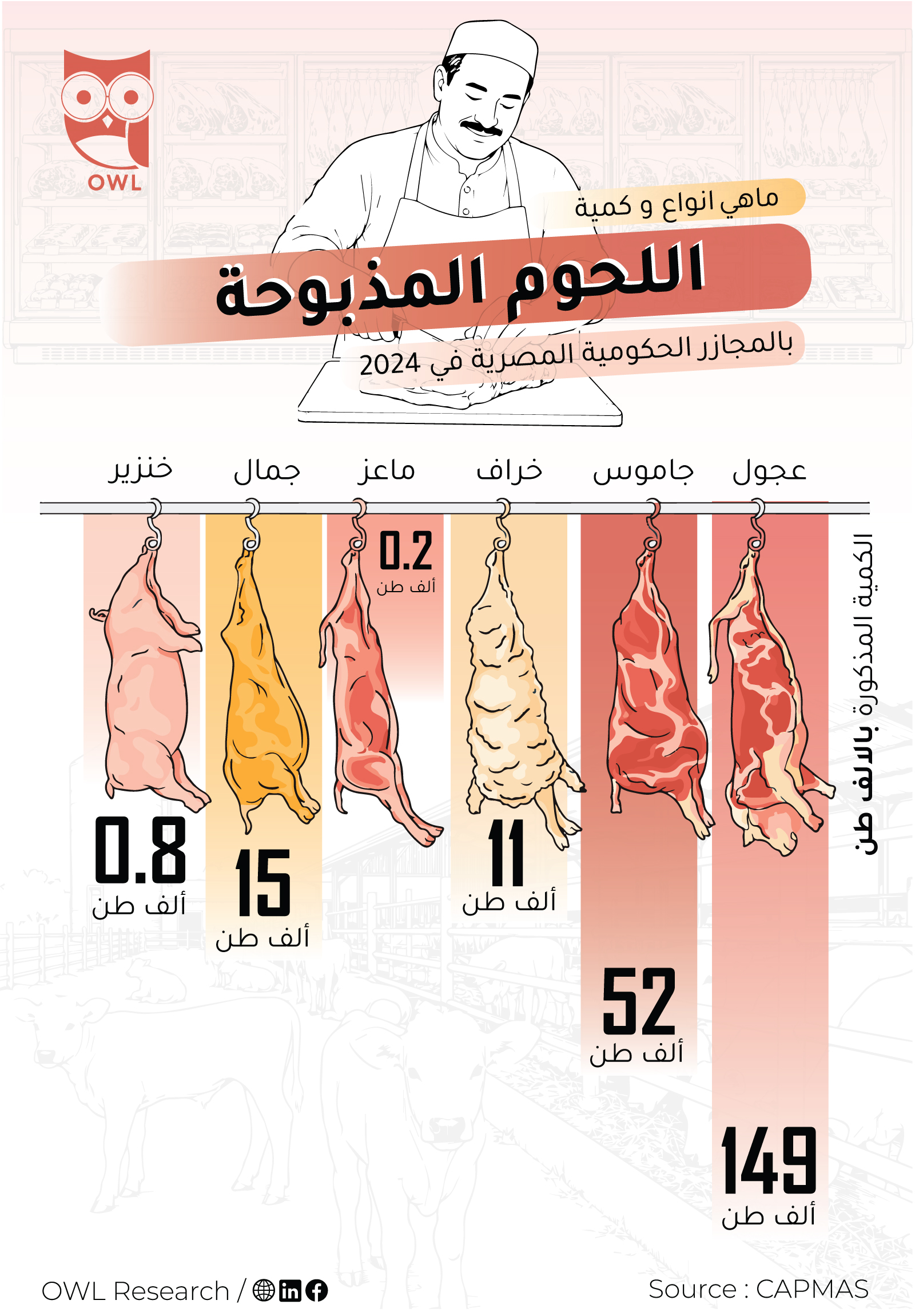
Data shows that calves and cattle accounted for approximately 149 thousand tons of slaughtered meat in Egyptian government slaughterhouses during 2024, making them by far the largest contributor to local red meat supply.
Buffalo meat ranked second with nearly 52 thousand tons, reflecting the continued importance of buffalo livestock within Egypt’s agricultural and dairy sectors.
Meanwhile, sheep production reached around 11 thousand tons, while camel meat recorded approximately 15 thousand tons, highlighting its continued role in specific regional markets and consumption patterns.
Goat and Pork Production Remain Limited
Compared to larger livestock categories, goat meat production remained relatively small at approximately 0.2 thousand tons, while pork production reached nearly 0.8 thousand tons.
These figures reflect both consumption preferences and the structure of Egypt’s livestock market, where beef and buffalo meat continue to dominate consumer demand.
Rising Demand Pressures the Sector
Egypt’s meat production industry continues to face multiple economic and operational challenges, including:
- Rising feed costs
- Import dependency for livestock inputs
- Currency fluctuations
- Increasing transportation and production expenses
- Growing population-driven demand
These pressures have contributed to higher retail meat prices and increased focus on expanding domestic production capacity.
Government Efforts to Strengthen Food Security
In recent years, Egypt has accelerated investments in livestock development projects aimed at improving local meat production and reducing import dependence.
Government initiatives include:
- Expanding cattle breeding programs
- Improving veterinary services
- Developing modern slaughterhouses
- Supporting feed production
- Enhancing supply chain infrastructure
These efforts are part of broader national food security strategies designed to stabilize meat availability and support long-term agricultural sustainability.
Outlook for Egypt’s Meat Industry
With population growth continuing to increase demand for protein consumption, Egypt’s livestock and meat sector is expected to remain strategically important over the coming years.
Future growth will likely depend on:
- Feed cost stability
- Expansion of local breeding programs
- Import market conditions
- Consumer purchasing power
- Government support policies
As Egypt continues balancing food security priorities with economic pressures, strengthening domestic livestock production remains a central pillar of the country’s agricultural strategy.