As geopolitical tensions continue to reshape the global landscape, defense spending has become a strategic priority for governments worldwide. From the ongoing war in Ukraine to rising competition in the Indo-Pacific and growing instability across several regions, nations are investing heavily in military capabilities, advanced technologies, and defense modernization programs.
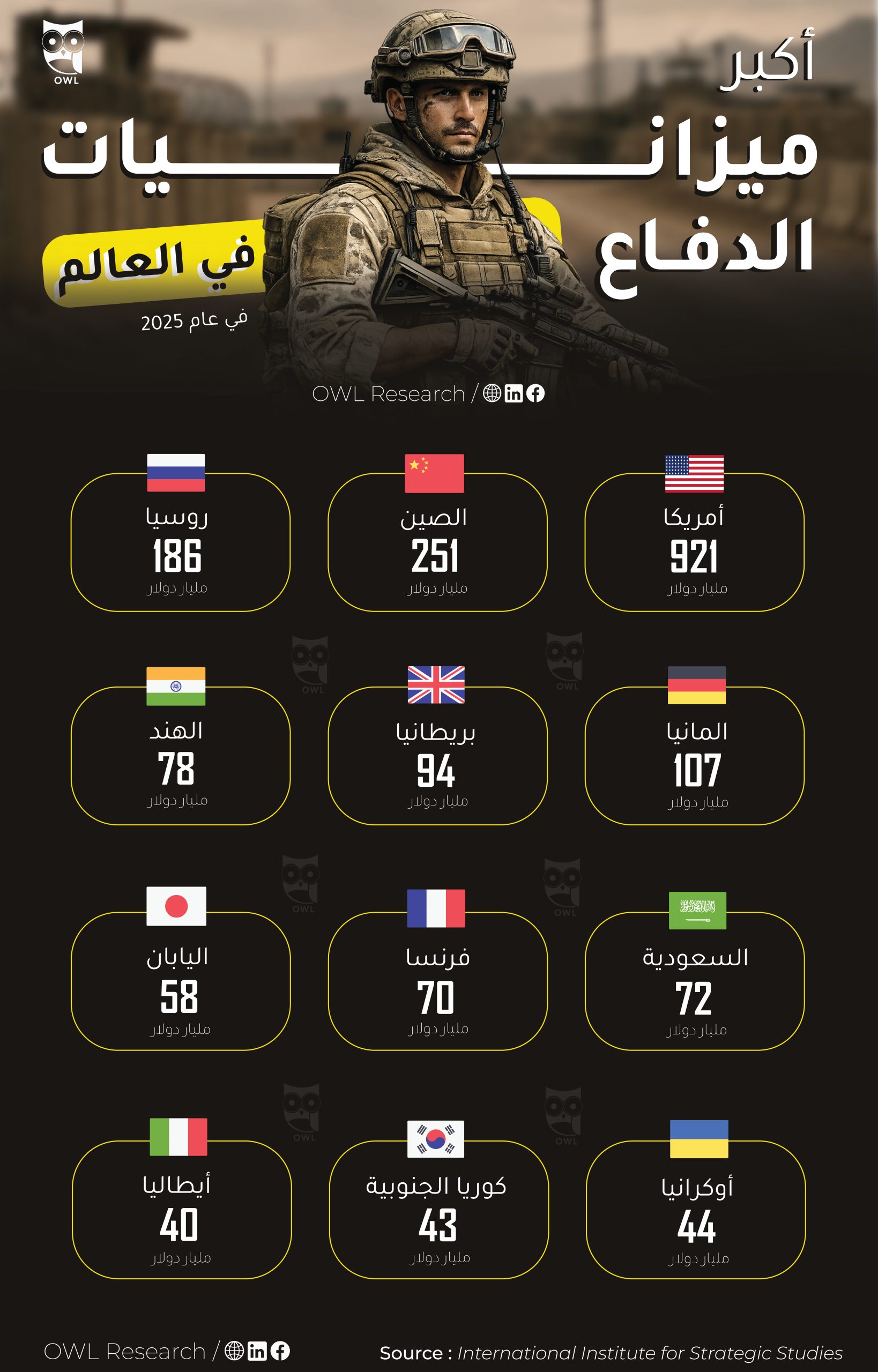
According to the latest data from the International Institute for Strategic Studies (IISS), global defense spending reached unprecedented levels in 2025, reflecting a world increasingly focused on security, deterrence, and military readiness.
The Top Defense Spenders in 2025
The United States remains the world’s largest military spender by a significant margin, allocating approximately $921 billion to defense. This figure exceeds the combined defense budgets of many major military powers and reflects America’s global military commitments and technological superiority.
China ranks second with an estimated $251 billion defense budget, continuing its long-term military modernization efforts and expansion of strategic capabilities across land, sea, air, space, and cyber domains.
Russia occupies third place with approximately $186 billion, maintaining exceptionally high military expenditures amid the continuing impact of the conflict in Ukraine and broader security priorities. Defense spending now accounts for more than 7% of Russia’s GDP.
The world’s ten largest defense budgets in 2025 are:
| Rank | Country | Defense Budget |
|---|---|---|
| 1 | United States | $921 Billion |
| 2 | China | $251 Billion |
| 3 | Russia | $186 Billion |
| 4 | Germany | $107 Billion |
| 5 | United Kingdom | $94 Billion |
| 6 | India | $78 Billion |
| 7 | Saudi Arabia | $72 Billion |
| 8 | France | $70 Billion |
| 9 | Japan | $59 Billion |
| 10 | Ukraine | $44 Billion |
Why Is Defense Spending Rising?
Several key factors are driving the surge in military expenditure worldwide:
1. Geopolitical Tensions
Ongoing conflicts and regional rivalries continue to push governments toward larger defense budgets. The war in Ukraine, tensions in the South China Sea, instability in the Middle East, and growing concerns over strategic competition among major powers have all contributed to increased military investment.
2. Military Modernization
Countries are investing heavily in next-generation capabilities, including:
- Artificial Intelligence (AI)
- Autonomous systems and drones
- Cyber warfare capabilities
- Missile defense systems
- Space-based military assets
- Advanced fighter aircraft and naval platforms
Modern warfare increasingly depends on technology, making innovation a central pillar of defense strategy.
3. Defense Industrial Expansion
Many governments are also increasing spending to strengthen domestic defense industries, improve supply chain resilience, and expand weapons production capacity. The lessons learned from recent conflicts have highlighted the importance of maintaining sufficient stockpiles and industrial readiness.
Europe’s Defense Transformation
One of the most notable trends in recent years has been the rapid growth of European defense spending. Germany has emerged as the world’s fourth-largest defense spender, while NATO members across Europe continue increasing military budgets in response to changing security conditions. Europe now accounts for more than one-fifth of global defense spending, a significant increase compared to just a few years ago.
The Middle East’s Growing Military Investments
Saudi Arabia remains the largest defense spender in the Middle East among the countries listed, with a defense budget exceeding $72 billion. Regional security concerns, modernization programs, and strategic competition continue to drive military investments across the Gulf region.
Looking Ahead
Global defense spending is expected to remain elevated in the coming years. Governments are increasingly viewing military readiness as a critical component of national security, economic resilience, and geopolitical influence.
While defense budgets continue to rise, the nature of military power is also evolving. Future competition will likely depend not only on the size of defense expenditures but also on the ability to integrate advanced technologies, strengthen defense industries, and adapt to rapidly changing security challenges.
With global defense spending reaching more than $2.6 trillion in 2025, the world is entering a new era where military investment is becoming an increasingly important indicator of strategic ambition and national preparedness.
Source: OWL Research analysis based on data from the International Institute for Strategic Studies (IISS) and global defense expenditure reports.