In Egypt, the question of why the US dollar’s exchange rate doesn’t decline more quickly often leads to a discussion about a critical and volatile component of the financial system: “hot money.” This refers to short-term foreign investments in high-yield Egyptian treasury bills and bonds, and it plays a major role in stabilizing—and complicating—the currency market.
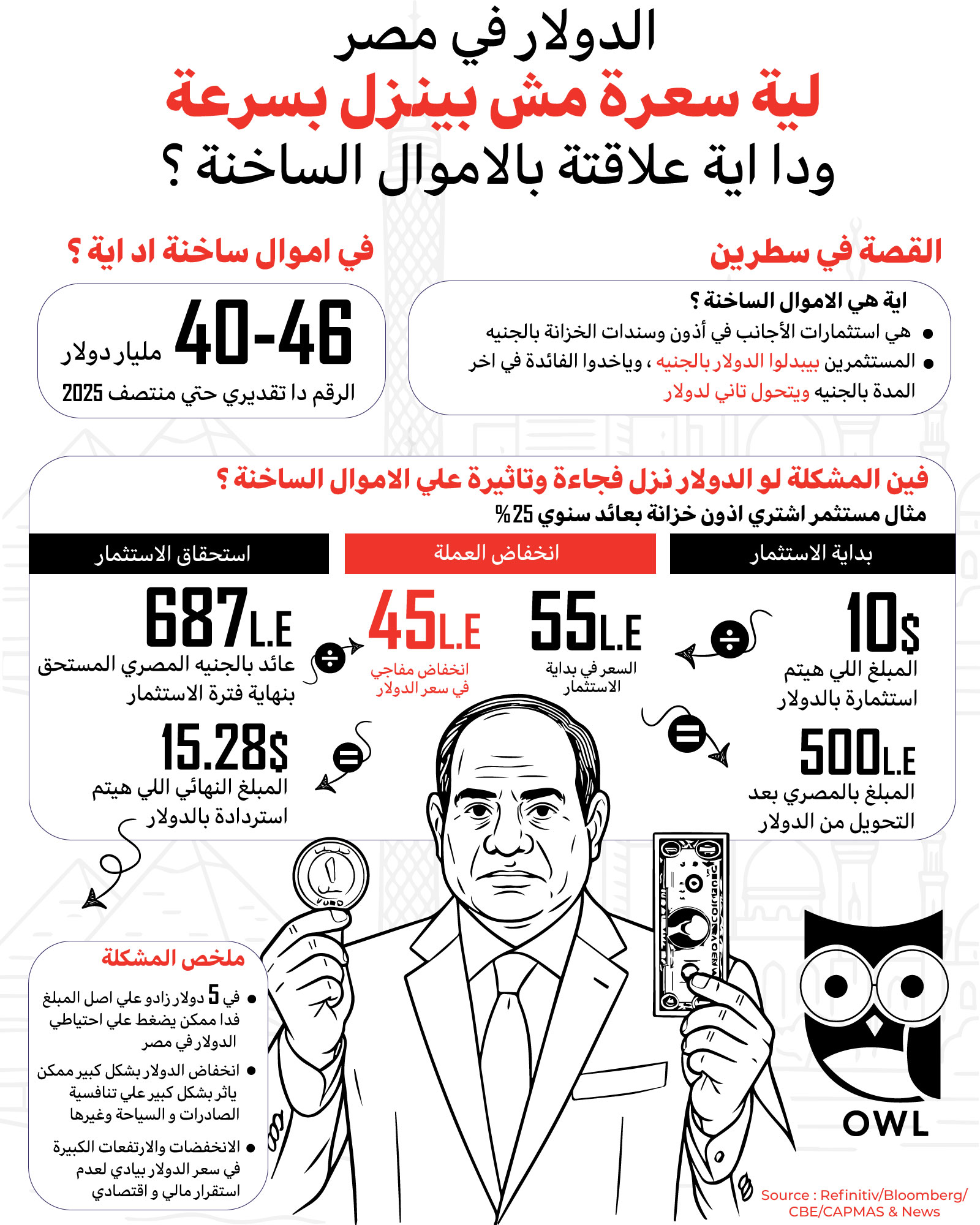
What is “Hot Money”?
“Hot money” is capital that foreign investors quickly move in and out of a country to profit from high interest rates and currency plays. In Egypt’s case:
- Investors convert dollars into Egyptian pounds (EGP).
- They invest these pounds in high-interest government debt instruments (like treasury bills).
- At maturity, they collect their principal and interest in pounds.
- They then convert the total pounds back into dollars.
If the exchange rate remains stable or the pound appreciates during this period, the investor profits from both the high yield and a favorable currency exchange.
The Scale of the Issue
Estimates suggest that the volume of such “hot money” in Egypt could range between $40 to $46 billion by mid-2025. This represents a massive overhang of potential future dollar demand, as these funds will eventually need to be converted back, pressuring Egypt’s foreign reserves.
The Problem with a Rapid Dollar Decline
A sudden, sharp drop in the dollar’s value (i.e., a rapid appreciation of the pound) would be problematic for these investors and, by extension, for financial stability. For example:
- An investor converts $10,000 at a rate of 45 EGP/USD, getting 450,000 EGP.
- They invest in a 1-year treasury bill with a 25% yield.
- At maturity, they receive 562,500 EGP.
- If the dollar has meanwhile fallen to 30 EGP/USD, converting back yields only $18,750.
- Despite the high local yield, the investor suffers a capital loss in dollar terms.
Why Egypt Cares About Stability
The government has a strong incentive to avoid a sudden, sharp pound appreciation because:
- Protecting Investors: A sudden drop could trigger a panic exit of hot money, forcing a massive, immediate drain on dollar reserves as investors rush to repatriate funds.
- Export Competitiveness: A significantly stronger pound would make Egyptian exports more expensive and tourism less attractive, hurting two vital sources of hard currency.
- Financial Stability: Extreme volatility in the exchange rate—whether up or down—creates uncertainty, deters long-term investment, and complicates economic planning.
The Bottom Line
The presence of tens of billions in “hot money” creates a complex balancing act. Egyptian monetary policy must carefully manage the exchange rate to prevent a destabilizing exodus of this capital while also working to attract more stable, long-term foreign direct investment. Therefore, the dollar’s exchange rate isn’t just a reflection of trade balances, but also a tool to manage a precarious portfolio of short-term international debt.