In recent years, Egypt has witnessed a remarkable expansion of app-based delivery services. Whether ordering food, groceries, medicine, or retail products, consumers have become increasingly dependent on delivery riders who connect businesses with customers in real time. Behind this convenience, however, lies a workforce facing significant economic, legal, and social challenges.
The Rise of Egypt’s Delivery Economy
The growth of digital platforms, e-commerce, and food delivery applications has transformed the labor market, creating employment opportunities for millions of Egyptians. Delivery work has become an accessible source of income for many young people seeking flexible employment and quick entry into the workforce. As demand for on-demand services continues to rise, delivery riders have become an essential component of Egypt’s urban economy.
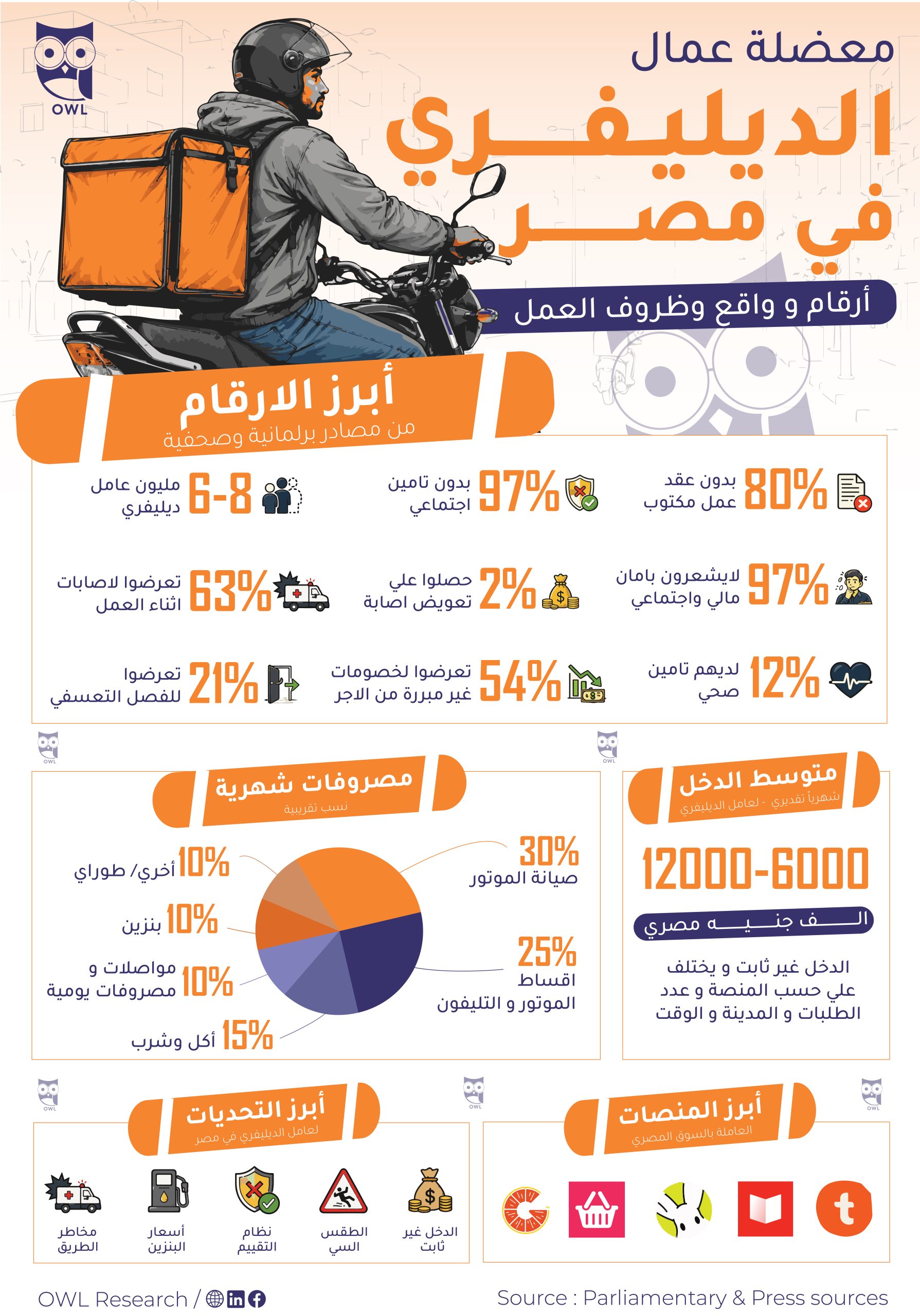
Recent parliamentary discussions indicate that Egypt has between 6 and 8 million delivery workers operating across various platforms and independent networks, making it one of the largest gig-economy labor segments in the country.
A Workforce with Limited Protection
Despite their growing importance, many delivery workers operate outside traditional employment frameworks. Research and parliamentary reports reveal several concerning realities:
- Approximately 80% work without written contracts.
- Around 97% lack social insurance coverage.
- Only 12% have access to health insurance.
- Nearly 63% have experienced work-related accidents or injuries.
- Just 2% of injured workers reported receiving compensation.
These figures highlight the gap between the rapid growth of the sector and the regulatory mechanisms needed to protect workers.
Financial Pressure Behind the Wheel
While delivery work offers income opportunities, earnings often fluctuate significantly depending on location, platform, working hours, demand levels, and the number of completed orders. Riders frequently bear operational costs themselves, including:
- Motorcycle maintenance
- Fuel expenses
- Mobile data and communication costs
- Vehicle installments and financing payments
- Safety equipment and protective gear
As a result, many workers face unstable monthly income while carrying substantial work-related expenses.
Safety Risks on Egypt’s Roads
Delivery riders spend long hours navigating congested urban environments under strict delivery deadlines. This combination increases exposure to traffic accidents, fatigue, and occupational hazards.
Studies examining delivery-driver safety have identified factors such as extended working hours, stress, pressure to complete deliveries quickly, and road conditions as key contributors to accidents and injuries.
The challenge is particularly significant because many workers lack comprehensive insurance coverage, leaving them financially vulnerable when accidents occur.
The Regulatory Challenge
Egypt has recently introduced legal frameworks addressing emerging forms of employment, including platform-based work. However, policymakers, labor advocates, and researchers continue to debate how delivery workers should be classified and protected.
A central issue is whether riders should be considered employees or independent service providers. This distinction affects access to benefits such as social insurance, healthcare coverage, paid leave, and workplace protections. Recent parliamentary inquiries have called for stronger enforcement mechanisms, clearer contractual obligations, and dedicated insurance systems tailored to the realities of delivery work.
Looking Ahead
Egypt’s delivery economy is expected to continue growing as digital commerce expands and consumer demand for convenience increases. The sector offers valuable employment opportunities and supports thousands of businesses across the country. However, sustainable growth will require balancing platform efficiency with worker welfare.
Improving insurance coverage, formalizing employment relationships, enhancing road safety measures, and strengthening worker protections could help ensure that the individuals who power Egypt’s delivery ecosystem are not left behind as the industry evolves.
As the gig economy matures, the future of Egypt’s delivery workforce will depend not only on technological innovation but also on creating a safer, fairer, and more sustainable working environment for the millions of riders who keep the country moving.