The global population has undergone a dramatic transformation over the past century.
Since 1930, population growth has reshaped the demographic landscape across major economies, with some countries experiencing extraordinary increases while others have seen comparatively slower growth.
The latest figures highlight a key demographic reality: population growth is increasingly concentrated in emerging markets, particularly across Asia and other developing economies.
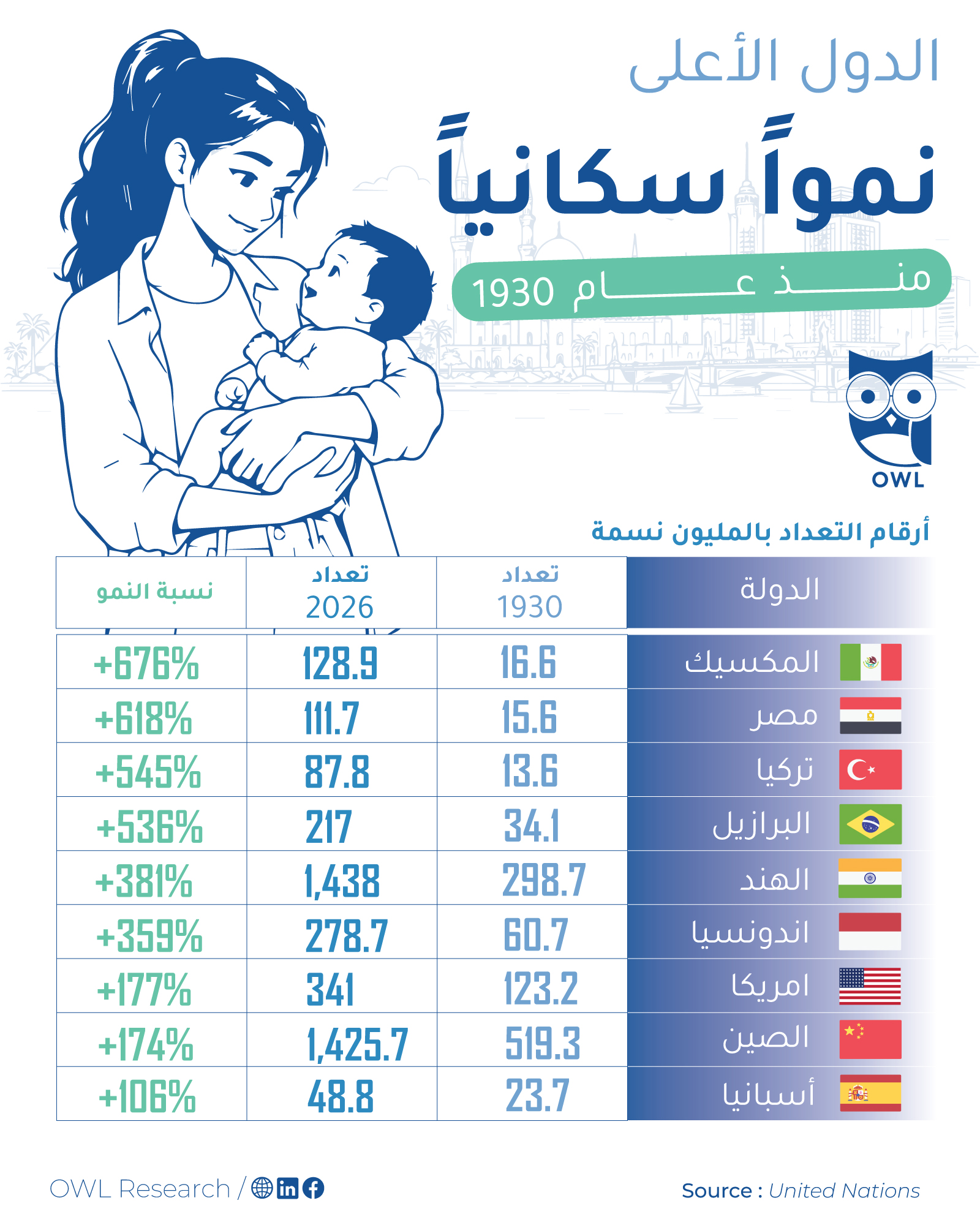
From 1930 to 2026: A Dramatic Demographic Shift
The scale of population growth becomes clear when comparing today’s population levels with those recorded in 1930.
Mexico’s population increased from approximately 16.6 million in 1930 to 128.9 million in 2026, representing growth of around 676%.
Egypt experienced an even larger relative increase, rising from 15.6 million to 111.7 million, equivalent to approximately 618% growth.
Turkey grew by around 545%, while Brazil recorded approximately 538% growth over the same period.
These figures illustrate how dramatically population structures have changed across major economies.
India and China: The Scale of Asian Population Growth
India remains one of the most significant demographic stories of the modern era.
Its population increased from approximately 298.7 million in 1930 to 1.44 billion in 2026, representing growth of around 381%.
China experienced a similarly dramatic transformation, increasing from approximately 519.3 million to 1.43 billion, an increase of around 174%.
Together, these two countries demonstrate the extraordinary scale of demographic change across Asia and their growing importance to the global economy.
Population Growth Is More Than a Number
Population growth has implications far beyond demographics.
A larger population can create:
- Larger consumer markets
- Greater demand for housing and infrastructure
- Expanding labour forces
- Higher demand for healthcare and education
- Increased consumption of food and energy
- New opportunities for businesses and investors
For companies, demographic change can therefore be an important indicator of future market potential.
A growing population does not automatically translate into economic growth, but it creates a larger potential base of consumers, workers and households.
Different Countries, Different Demographic Stories
Not all countries are following the same trajectory.
The United States increased from approximately 123.2 million people in 1930 to 341 million in 2026, while Spain grew from 23.7 million to 48.8 million, representing a much more moderate increase.
Indonesia, meanwhile, experienced population growth of approximately 359%, reaching around 278.7 million people in 2026.
These differences highlight the increasingly diverse demographic trajectories of major economies.
Some markets continue to benefit from strong population growth, while others are entering periods characterized by slower growth and demographic ageing.
The Business Implications
For businesses and policymakers, understanding population trends is becoming increasingly important.
Population growth influences the size and composition of consumer markets, while factors such as age structure, urbanisation, household formation and income growth determine how those populations translate into economic demand.
The next phase of global growth will therefore not simply be about how many people there are, but who they are, where they live and how their needs are changing.
OWL Research Perspective
At OWL Research, we see demographic change as one of the fundamental forces shaping markets.
Population trends provide the foundation for understanding future consumer demand, market opportunities and business growth.
The numbers tell us that the world’s population has changed dramatically since 1930. The more important question for businesses is what those demographic changes mean for the markets of tomorrow.
Population growth changes the size of the market. Demographics change the market itself.