
The tourism sector across the Arab world is experiencing a major upswing in 2024, becoming one of the fastest-growing pillars of national economies. This growth is driven by a mix of rich geography, diverse cultural heritage, and massive government investments aimed at transforming tourism into a long-term economic engine.
Saudi Arabia Leads the Region
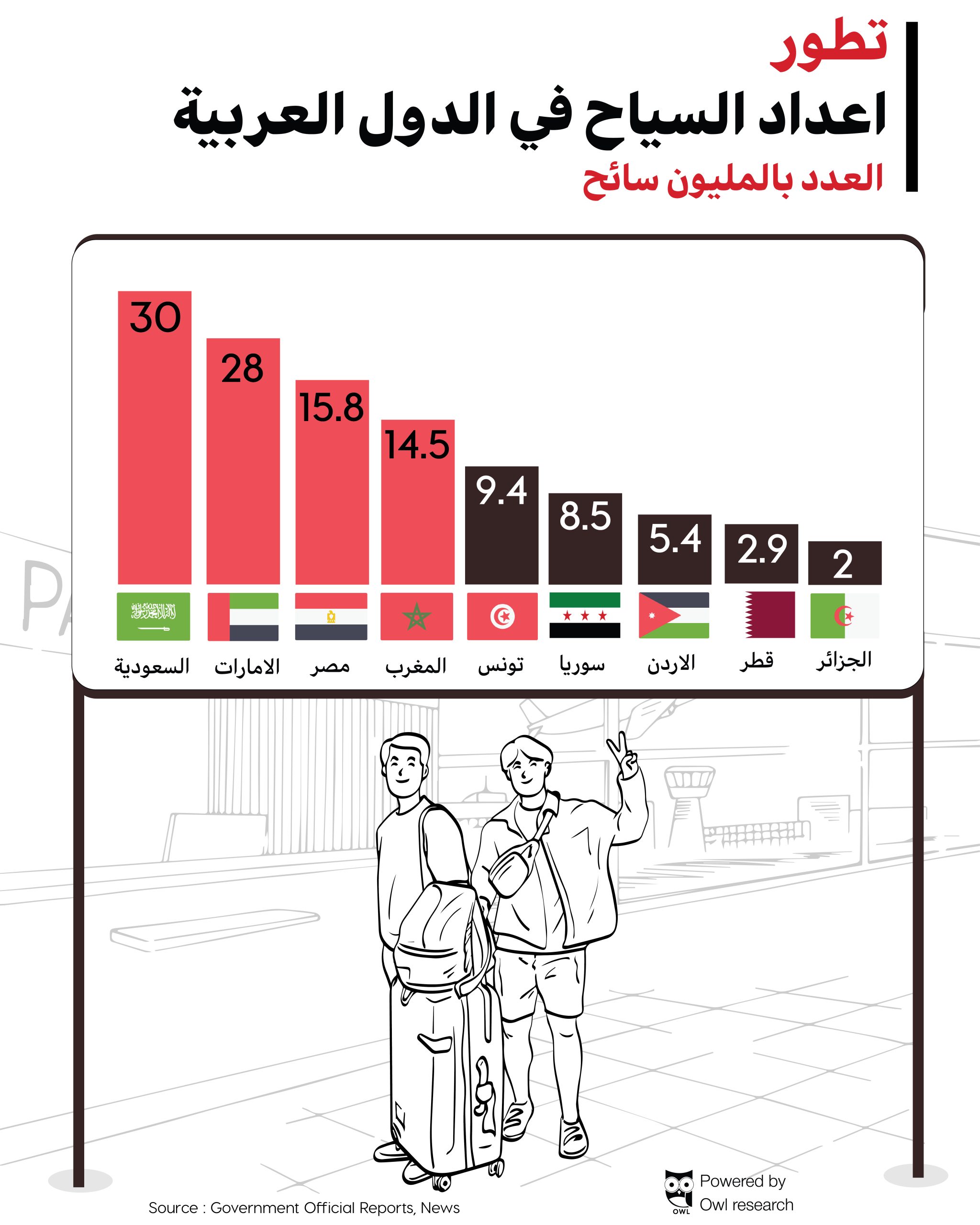
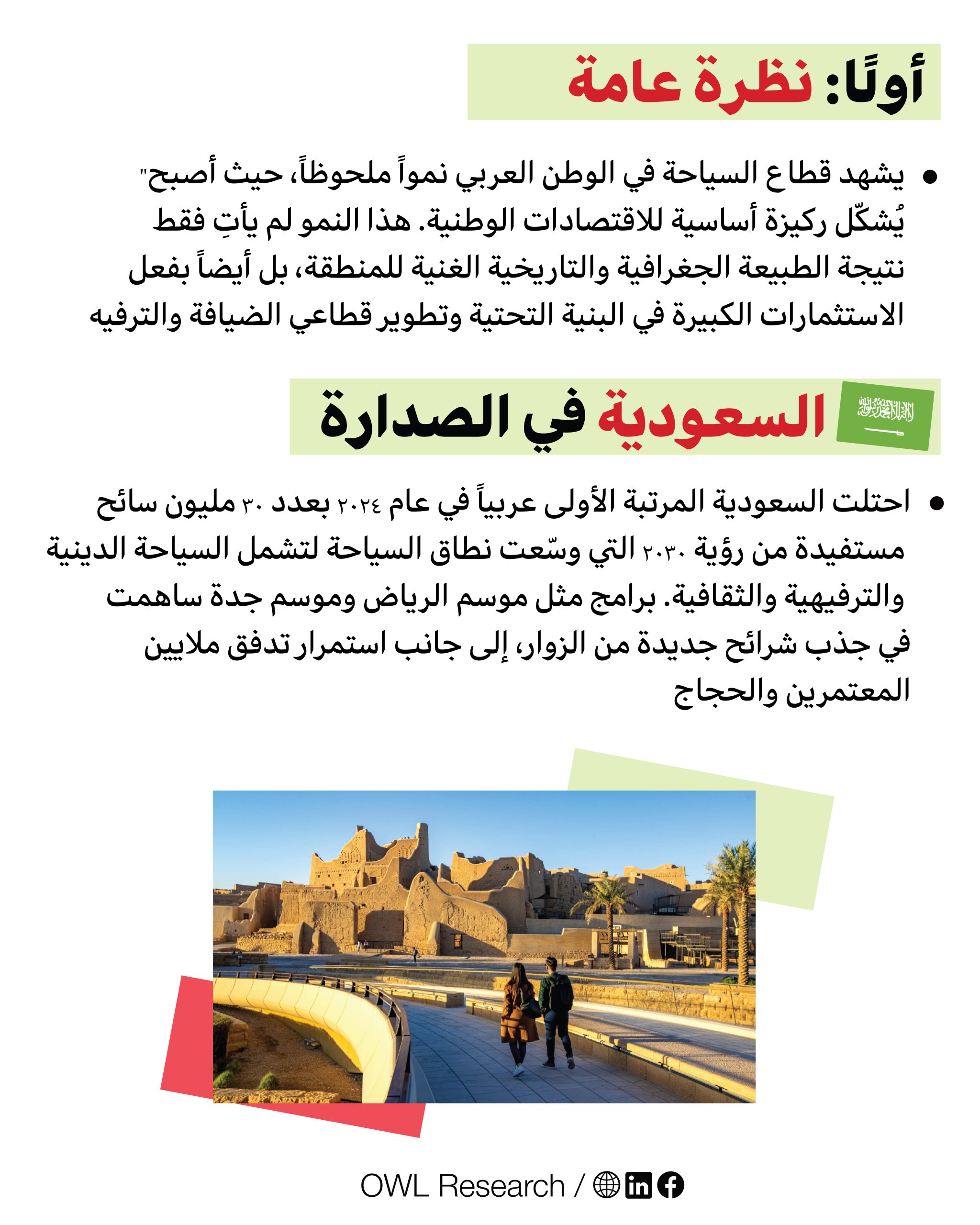
Saudi Arabia tops the Arab tourism rankings with 30 million visitors. Under Vision 2030, the Kingdom expanded its tourism offerings beyond religious travel to include cultural, entertainment, and luxury destinations. Events like Riyadh Season and Jeddah Season attracted millions, while continuous inflows of pilgrims further strengthened its tourism numbers.
UAE: A Regional Powerhouse
The UAE welcomes 28 million tourists, strengthened by Dubai and Abu Dhabi’s global status as world-class destinations. Iconic landmarks like Burj Khalifa, Yas Island, and Palm Jumeirah, combined with unmatched infrastructure, make the UAE a magnet for luxury, business, and entertainment tourism.
Egypt: History and Diversity
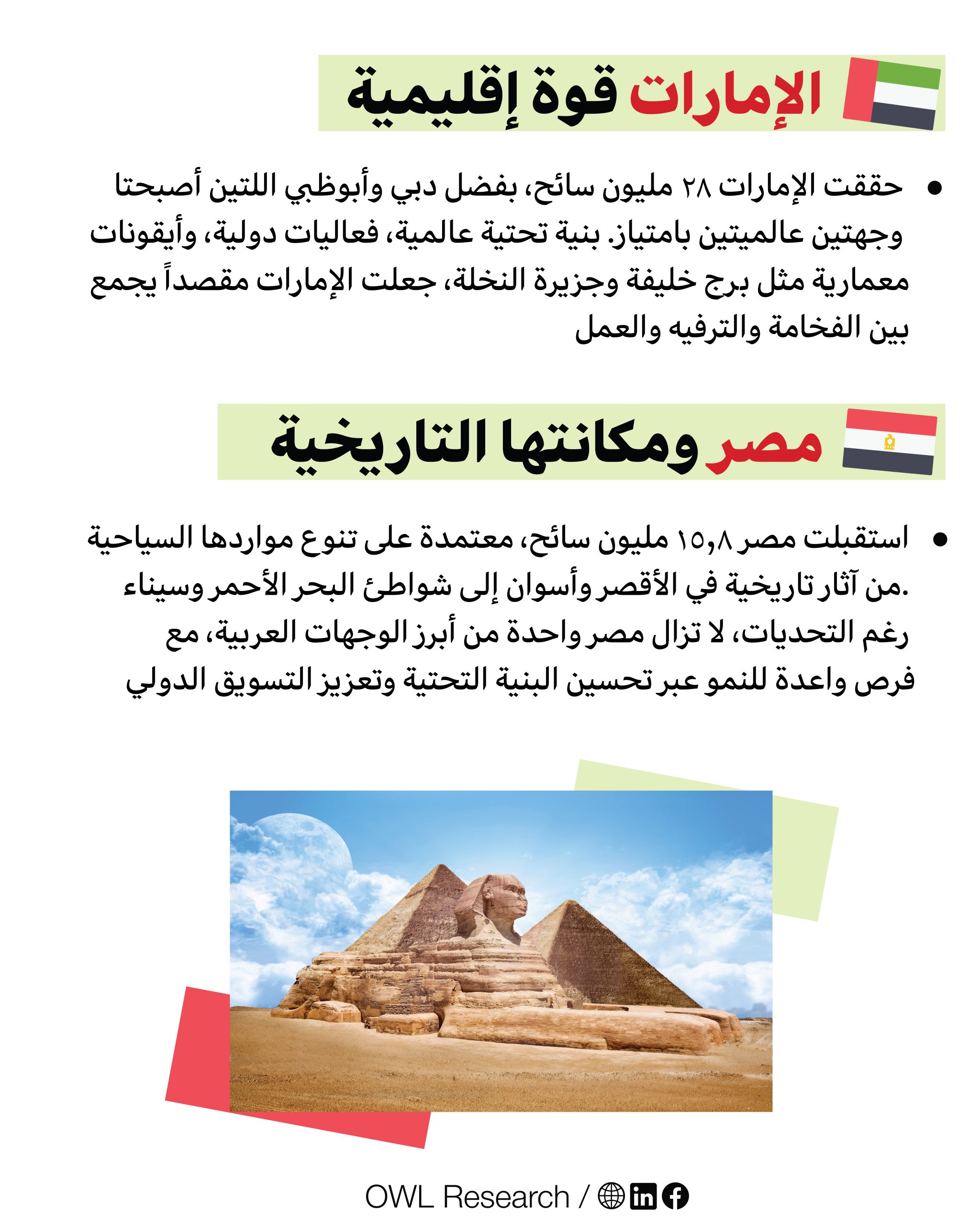
Egypt received 15.8 million tourists, supported by its unmatched historical heritage—from the Pyramids to Luxor and Aswan—and its popular Red Sea destinations. Despite challenges, Egypt remains one of the most attractive Arab destinations and holds strong potential for further growth through infrastructure upgrades and global marketing.
A Growing Regional Momentum
Other Arab countries are also making notable progress:
- Morocco with 14.5M tourists
- Tunisia with 9.4M
- Syria, Jordan, Qatar, and Algeria showing steady improvement
The region as a whole is witnessing a tourism transformation, supported by modernization efforts, heritage preservation, and expanding travel connectivity.